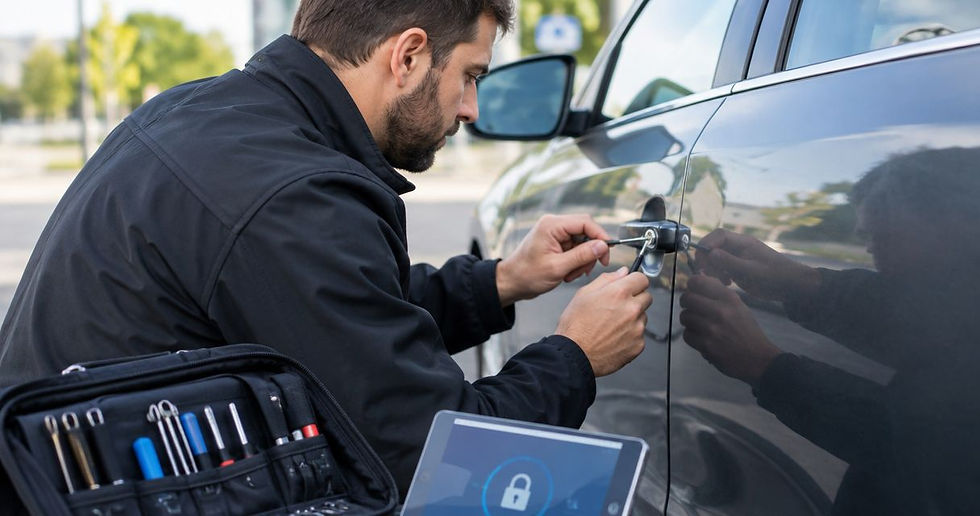
Rekey vs Change Locks: A Professional Guide to Home Security in 2026

Spending more on brand-new hardware won't necessarily make your house any safer than a simple internal adjustment. When you move into a new property or lose a spare set of keys, the immediate instinct is to rip out the old deadbolts and start fresh. It's a natural reaction to the fear of unauthorized access. However, understanding the technical differences of rekey vs change locks can save you significant money without compromising your family's safety. You likely want a solution that fits your budget while ensuring that old keys no longer work.
In this professional guide, you'll master the technical and financial differences between these two methods to choose the best security strategy for your property. We'll examine the mechanical health of your current lock cylinders and look at how 2026 trends, such as the rise of biometric authentication and smart home integration, influence your decision. We will break down the specific scenarios where a simple pin reset is sufficient and when a structural hardware overhaul is mandatory for modern protection.
Table of Contents
Understanding the Basics: Rekey vs Change Locks Explained
Choosing between a surgical security update and a structural hardware overhaul is a critical diagnostic step for any property owner. When you evaluate the dilemma of rekey vs change locks, you're essentially deciding whether your current hardware is worth keeping. Both methods achieve a singular, vital goal: they ensure that anyone holding an old key can no longer gain entry. This logic isn't just limited to your front door. It mirrors the diagnostic process used in automotive security, where resetting an ignition cylinder provides an access reset without the need to replace the entire steering column assembly.
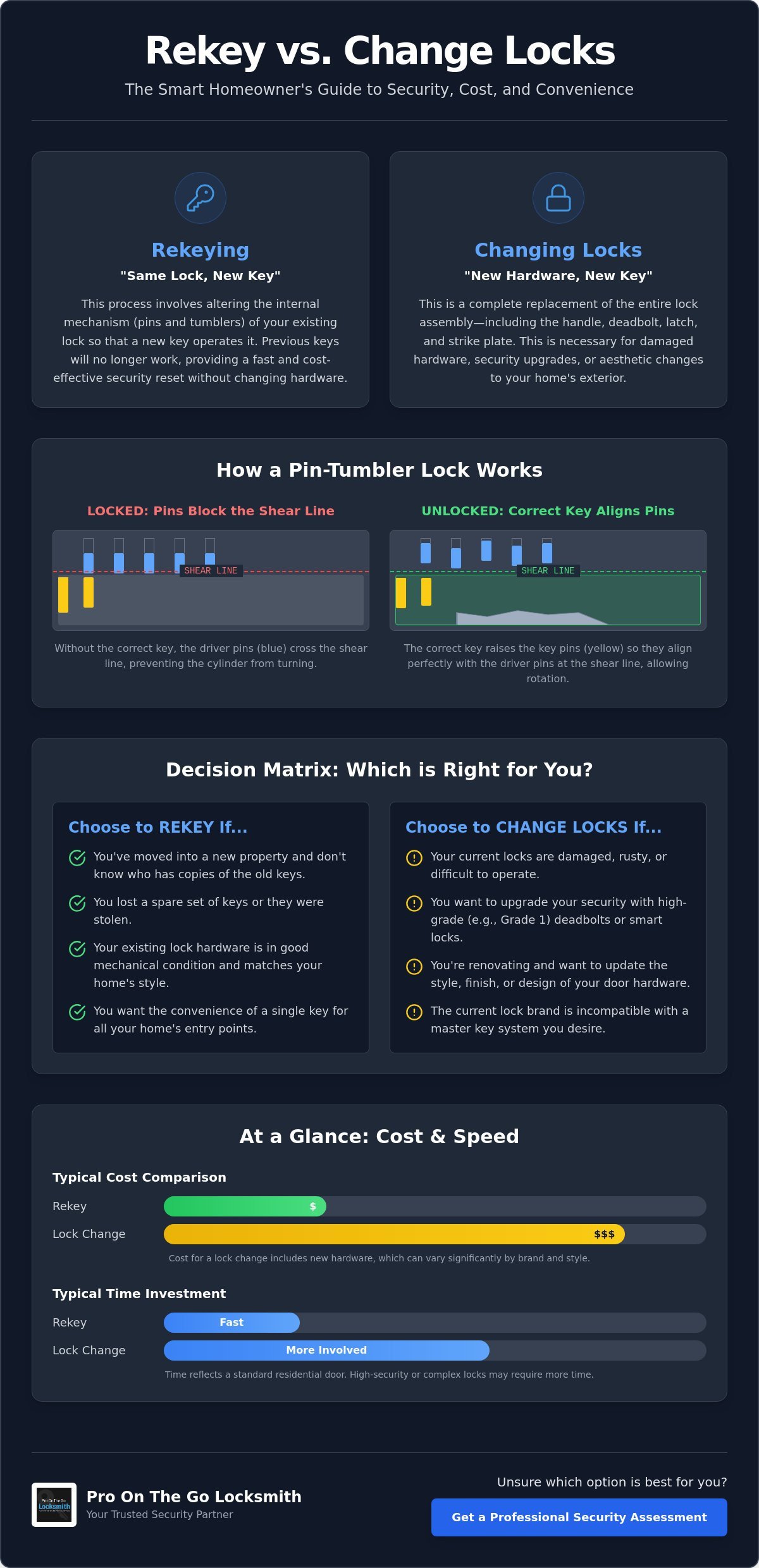
Professionals refer to rekeying as the "Same Lock, New Key" philosophy. It preserves the exterior aesthetics of your home while completely neutralizing the threat of unauthorized duplicates. Changing locks, by contrast, implies a total removal of the deadbolt or handle set. You're starting from scratch with brand-new mechanical components. While both paths lead to a secure home, the technical execution and final hardware footprint differ significantly.
What is Rekeying? The Internal Reset
Most residential locks operate on a pin and tumbler system. Inside the cylinder, a series of small pins must align perfectly at the shear line for the lock to turn. A technician performs a rekey by removing the cylinder and replacing these internal pins with a new configuration that matches a different key. For a deeper look at the mechanics, you can explore How Lock Rekeying Works. This process is the preferred choice for new homeowners on a budget. It provides immediate peace of mind without the cost of high-end decorative hardware. It's fast, efficient, and keeps your existing door prep intact.
What is a Lock Change? The Hardware Overhaul
A lock change is a comprehensive hardware replacement. This involves removing the entire mechanical assembly, including the strike plate, latch, and interior thumb-turn. While rekeying focuses on the "brain" of the lock, a change replaces the entire "body." This is often a style or curb appeal decision. If your hardware is tarnished, outdated, or mismatched, a full replacement allows you to modernize your home's aesthetic instantly. The complexity of this task often depends on the different types of locks currently installed. High-security mortise locks or specialized electronic handlesets require more intensive labor than a standard tubular deadbolt, making professional installation essential for a precise fit.
The Technical Side of Rekeying: How Lock Cylinders Work
Security relies on microscopic tolerances. When evaluating the choice to rekey vs change locks, understanding the internal math of a cylinder reveals why professional precision is mandatory. Most residential entry points utilize a pin-tumbler mechanism. This system consists of a series of vertical chambers, each housing a spring, a driver pin, and a key pin. These components must move in perfect unison to allow access. If a single pin is off by a fraction of a millimeter, the lock remains seized, protecting your home from unauthorized entry.
The rekeying process is a surgical recalibration of this system. A technician decodes the depths of a new key and replaces the existing key pins with ones that match those specific measurements. This allows for advanced synchronization, such as a "Master Key" setup. Through rekeying, you can configure every door in your home to operate with one single key, eliminating the frustration of a heavy, confusing keychain. This level of customization is a primary reason why rekeying is often more efficient than a full hardware replacement for large properties.
The Anatomy of a Standard Pin-Tumbler Lock
Inside the brass housing, the springs apply constant downward pressure on the driver pins, which in turn push the key pins into the keyway. Without a key, the driver pins bridge the gap between the plug and the housing, preventing rotation. The shear line is the critical point where the cylinder rotates. When you insert the correct key, the bitting lifts the pins until the break between the driver and key pins aligns perfectly with this shear line. Professional locksmiths use specialized tools to map these depths, ensuring the new pin stack operates smoothly without catching or sticking.
Why DIY Rekeying Kits Often Fail
Consumer-grade rekeying kits often lack the durability and precision of professional components. A common frustration for DIY enthusiasts is "bricking" the lock. This happens during disassembly if the top pins and springs fall into the cylinder without a plug follower to hold them in place. Once this occurs, the lock is often permanently jammed. Professionals utilize specific tools to prevent this:
Plug Followers: These solid tubes maintain tension on the upper pins while the cylinder is removed.
Specialized Tweezers: These allow for the surgical placement of pins without damaging the delicate springs.
Precision Gauges: These verify that every pin is seated to the exact depth required for long-term reliability.
If you're unsure about the internal condition of your hardware, a professional residential lock rekeying assessment ensures the job is done right the first time, preventing a simple update from turning into a costly hardware failure.
When Changing Your Lock Hardware is the Only Safe Option
Rekeying is a precision-based solution, but it cannot restore a lock that has suffered structural failure. When you weigh the decision of rekey vs change locks, the physical state of the hardware often dictates the outcome. If the internal mechanism is grinding, sticking, or failing to engage consistently, simply changing the pins won't resolve the underlying issue. In these cases, a full replacement is the only way to ensure your property remains secure. A new lock provides a fresh start with modern materials that are more resistant to the environmental stresses that degrade older equipment.
Beyond mechanical failure, homeowners often choose a full hardware overhaul to upgrade their security standards. Many residential properties are equipped with basic Grade 3 hardware, which is sufficient for low-traffic areas but lacks the robust protection of higher-rated systems. Moving to a Grade 1 deadbolt significantly increases resistance to forced entry. Additionally, if you're looking to integrate smart home technology or biometric access, a complete hardware change is required to accommodate the electronic components and motorized latches that define modern security in 2026. This transition also allows for aesthetic matching, ensuring that a single broken handle doesn't leave your entryway looking mismatched and neglected.
Signs of Mechanical Failure and "Lock Fatigue"
Identifying "sticky" locks is a primary diagnostic step. If you have to jiggle the key or pull the door to get the bolt to slide, the internal components have likely reached a state of "lock fatigue." In coastal regions like Tampa, the constant humidity accelerates internal corrosion and oxidation. This salt-air exposure can seize the springs and pit the cylinder walls, making rekeying impossible. If the strike plate or the door frame itself is compromised, a professional must install a complete hardware set with longer screws and reinforced plates to restore structural integrity. A simple pin change cannot fix a latch that no longer aligns with the door frame.
Security Upgrades and Modern Standards
The American National Standards Institute (ANSI) provides a clear framework for evaluating hardware. Grade 1 is the highest level of security, often reserved for commercial use, while Grade 3 is the standard residential baseline. Older locks are significantly more susceptible to "bumping" or "picking" attacks because they lack the anti-drill plates and security pins found in modern units. By applying commercial lock change Tampa principles to your home, you can achieve a level of protection that discourages even the most persistent intruders. This proactive approach ensures that your security isn't just a deterrent, but a formidable barrier. Replacing outdated hardware allows you to take advantage of these higher standards without the limitations of your existing door prep.
Decision Matrix: Evaluating Cost, Security, and Design
Deciding between rekey vs change locks requires a diagnostic look at your property's total entry points. If you have a standard home with four or five exterior doors, the financial gap between these two services widens quickly. Rekeying is a labor-heavy process where you pay for a technician's specialized expertise to manipulate internal components. Changing locks is material-heavy, requiring the purchase of new brass, steel, and decorative finishes. For property owners managing multiple doors, rekeying scales much more efficiently because it eliminates the high cost of purchasing dozens of new hardware sets.
The environmental factor is a silent hardware killer that many homeowners overlook. In Florida, salt air and high humidity cause galvanic corrosion inside the cylinder housing. If your locks are already showing green oxidation or a white powdery residue, rekeying is often a temporary fix for a terminal problem. Choosing new hardware with PVD coatings or marine-grade finishes ensures your security survives the local climate. However, if your current hardware is high-end, such as heavy-duty mortise locks, rekeying preserves that superior engineering while providing a complete access reset.
Cost Comparison: Labor vs. Parts
Rekeying 10 doors is significantly cheaper than buying 10 new sets of quality hardware. When you have specialized hardware, it's almost always better to rekey. These units are designed for longevity and surgical repair rather than disposal. Be cautious of "free" or ultra-cheap locks from big-box retailers. These consumer-grade sets often use plastic internal components that wear out within a few years. While the initial price is low, they end up costing more in long-term security failures and emergency lockout fees compared to a professional rekey of existing, high-quality hardware.
The "One Key to Rule Them All" Convenience
Consolidating your keychain into a single master key is a primary benefit of the rekeying process. This eliminates the frustration of fumbling through a heavy ring of keys every time you come home. For this to work, your locks must share the same keyway brand, such as Schlage or Kwikset. A technician can "key alike" every entry point, including the garage side door and the back patio. Rekeying is the only way to unify access without replacing every handle in the house. This methodical approach streamlines your daily routine while ensuring that every door is equally protected.
Just as a unified key system improves daily efficiency, The Garage RX helps homeowners create organized and efficient residential spaces through professional garage transformations.
If you're managing a large property and need a strategic rollout, schedule a professional house lock rekey to unify your security under one master key system today.
Professional Security Solutions: Beyond the Front Door
Security is a holistic ecosystem rather than a series of isolated hardware choices. While the decision to rekey vs change locks often starts at the front door, the same technical logic applies to every access point on your property, including your vehicles and commercial spaces. A professional security strategy looks beyond the immediate frustration of a lost key. It evaluates the "health" of every cylinder to determine if a surgical pin reset or a total hardware replacement is necessary for long-term safety. By viewing your security through a diagnostic lens, you ensure that every barrier, from the backyard gate to the office entry, operates with the same level of precision and reliability.
The first step in any meaningful security update is a professional audit. A licensed technician doesn't just swap parts; they assess the structural integrity of your door frames, the alignment of your strike plates, and the current wear on your internal springs. This methodical approach identifies hidden vulnerabilities that a simple DIY kit would overlook. Choosing a local specialist ensures your hardware is rated for the specific environmental demands of the region, guaranteeing performance even after years of exposure to salt air and heat.
Automotive Crossover: Ignition and Door Rekeying
The technical principles used in residential locks mirror the complexities of vehicle security. If you find yourself in an "all keys lost" situation, you might require mobile car key replacement to restore access. However, modern automotive security adds a digital layer to the mechanical process. While a residential deadbolt relies purely on physical pins, vehicles utilize transponder keys that must be programmed to the car's immobilizer system. Rekeying a vehicle ignition is significantly more complex than a standard house lock; it involves navigating intricate electronic components and specialized wafers. If your ignition is sticking, a technician can often perform a repair or a rekey to match your existing door locks, providing a unified solution that mirrors the "one key" convenience of a residential master key system.
The Pro On The Go Locksmith Advantage
Our "diagnose first" approach sets us apart from generic handyman services. We believe that a professional consultation should lower your anxiety by providing a clear, pragmatic plan for your property. Our mobile service units are fully equipped shops on wheels. We bring the necessary precision tools, high-security pins, and modern hardware directly to your Tampa doorstep, allowing for on-site diagnostics and immediate resolution. This efficiency saves you time and ensures that your property is never left vulnerable during the transition. Whether you are dealing with a lockout or planning a major security overhaul, we prioritize transparency and technical excellence. Schedule your security audit or rekeying service today to ensure your property is protected by a modern master technician.
Secure Your Property with Precision and Confidence
Choosing between a surgical internal update and a complete hardware overhaul determines the long-term resilience of your security. You've learned that rekeying offers a cost-effective way to unify access across multiple doors, while full replacements are mandatory when hardware reaches the end of its mechanical life. The decision of rekey vs change locks shouldn't be a source of anxiety or confusion. By focusing on the health of your lock cylinders and the specific security standards you need, you can protect your investment without overspending on unnecessary parts.
We bring a fully equipped mobile shop directly to your Tampa doorstep, providing specialized expertise in both automotive and property systems. As a Licensed Florida Locksmith (#HCLOC23013), our team prioritizes transparency and technical precision in every diagnostic assessment. Secure your home or business with professional rekeying from Pro On The Go Locksmith. You can rest easy knowing your property is truly protected by a plan that fits your specific needs and budget. Take control of your security today with a partner who values your safety as much as you do.
Frequently Asked Questions
Is it cheaper to rekey or change locks?
Rekeying is significantly more cost-effective because you only pay for specialized labor and small internal pins. Changing locks requires purchasing the entire handle or deadbolt assembly, which adds substantial material costs to the project. This is why rekeying is the preferred choice for property managers and new homeowners who want to secure multiple entry points without the expense of brand-new hardware.
Can all types of locks be rekeyed?
Most standard pin-and-tumbler locks found on residential doors support rekeying. However, some specialized electronic locks or ultra-budget hardware from big-box stores may have sealed cylinders that cannot be serviced. A technician must inspect the keyway and housing to confirm if an internal reset is possible. If the hardware is proprietary or integrated into a smart system, a full replacement might be the only path forward.
How long does it take a professional locksmith to rekey a door?
A professional technician typically completes a standard cylinder rekey in 15 to 20 minutes. This timeframe includes removing the cylinder from the door, replacing the internal pins, and testing the new key for smooth operation. If you have several doors, a mobile locksmith can often secure an entire house within a single hour, providing a fast resolution to your security concerns.
Do I need the original key to rekey a lock?
You don't necessarily need the original key to perform a rekey. While having the key makes the process faster and more straightforward, a specialist can pick the lock or use a decoding tool to reach the internal pins. This is a common solution when keys are lost or stolen and you need to revoke access immediately to protect your family and property.
Can I rekey my locks myself with a kit from a hardware store?
You can buy DIY kits, but they often lack the precision and durability of professional-grade components. There is a high risk of "bricking" the lock if a spring or pin slips during disassembly, which would require a full replacement. Professional tools like plug followers and specialized tweezers ensure the cylinder remains functional and secure, preventing a simple update from becoming a costly failure.
What happens to the old keys after a lock is rekeyed?
The old keys become completely non-functional the moment the internal pin configuration is changed. This is the primary goal when you evaluate rekey vs change locks for your property. You don't need to worry about previous tenants, former employees, or contractors having access once the shear line is recalibrated to a new key pattern. The old keys can be safely discarded or recycled.
Should I change my locks if I just moved into a new house in Tampa?
You should absolutely secure your new Tampa home by either rekeying or changing the locks immediately after closing. You don't know how many copies of the current keys were given to cleaners, contractors, or neighbors by the previous owner over the years. Rekeying is the fastest way to gain total control over who can enter your new space, providing immediate peace of mind during your move.
Can a locksmith rekey a lock so it works with my car key?
Residential locks cannot be rekeyed to match a car key because the mechanical keyways are fundamentally different. House keys use specific bitting patterns and blade widths that don't align with the wafers inside an automotive ignition. However, a locksmith can unify all your house doors to work with a single master key, simplifying your life while maintaining a high level of residential security.