
Apartment Lock Change Service in Tampa: What Florida Tenants Should Know

What can you do if your Tampa landlord refuses to change the apartment locks? A lock change may seem like the simplest way to control who can enter, especially when you don’t know who still has keys. But the right next step depends on your lease, the reason for the request, and who authorizes the work. An apartment lock change service Tampa tenants arrange should fit those details, not create a new problem with management.
It’s reasonable to want clearer control over access without damaging the rental or violating your lease. Florida’s landlord-tenant rules address lockouts and property access, while lease terms may also affect whether a tenant can change a lock independently. The details matter, so this overview offers practical context, not legal advice.
You’ll learn what to document, how to raise a lock concern with property management, and when rekeying may be enough if the existing hardware is in good condition. We’ll also explain when replacement may make more sense and how to arrange authorized on-site residential lock work in Tampa after you and management agree on a plan.
Table of Contents
Apartment Lock Change Service in Tampa: Why the Rekey-or-Replace Choice Matters
If your landlord declines a lock-change request, uncertainty about who might still have a key can feel unsettling. Before arranging an apartment lock change service, Tampa renters should separate two questions: what hardware work could address the concern, and who has authority to approve changes to the rental unit. A locksmith can explain the available work, but that doesn’t establish a tenant’s legal right to make the change.
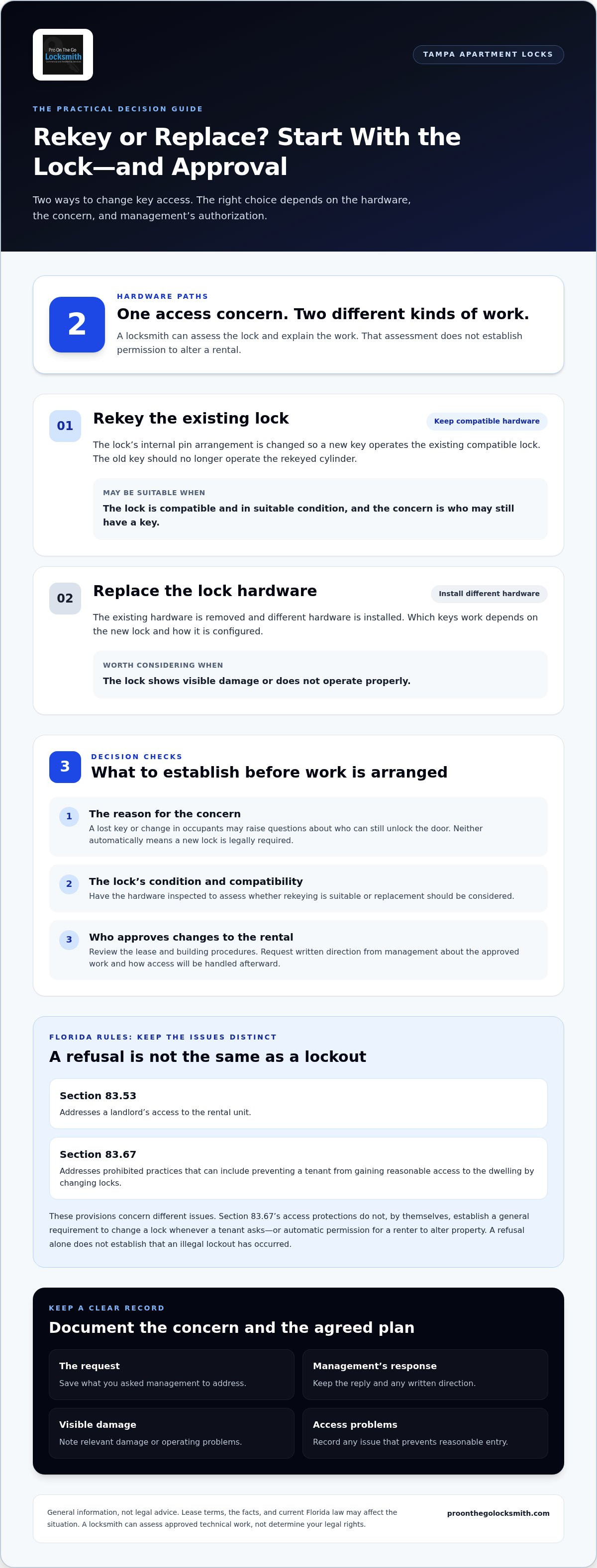
Rekeying changes which key operates an existing compatible lock, usually by changing its internal pin arrangement rather than replacing the hardware. The old key should no longer operate the rekeyed cylinder; a new key is used instead. For a plain-language overview of the mechanism, see Rekeying a lock.
Replacing a lock means removing existing hardware and installing different hardware. This also changes which keys work, depending on the new lock and how it’s configured. The right choice depends on the lock’s condition and compatibility, as well as management’s authorization.
When does an apartment lock need rekeying or replacement?
A lost key or change in occupants may raise questions about who can still unlock the door. If the existing lock is compatible and in suitable condition, rekeying may address key access without replacing the hardware. A locksmith can inspect it and assess whether rekeying is suitable.
Visible damage or a lock that doesn’t operate properly may make replacement worth considering. A move-in or lost key doesn’t, by itself, mean a new lock is legally required. This article concerns apartment doors, not vehicle keys; the separate Tampa car key replacement page covers vehicle-key needs.
Why does apartment authorization matter?
Apartment locks and door hardware are part of the rental property, so a valid security concern is separate from permission to alter the property. Changing hardware without authorization could create issues with the lease, management’s access arrangements, or responsibility for restoring the unit.
Lease terms and current Florida law need careful, case-specific review. Don’t assume that a locksmith’s ability to rekey or replace a lock means you’re entitled to arrange the work independently. Describe the concern to management and request written direction about the approved work. Once you and the property manager agree on a plan, authorized on-site service can help put it into effect.
What Florida Law Says About a Landlord Refusing an Apartment Lock Change
A landlord’s refusal to change or rekey an apartment lock can leave you unsure how to protect your access and belongings. Florida law distinguishes that request from a landlord preventing a tenant from entering the home. This section is general education, not legal advice; the answer can depend on your lease, the facts, and current law.
Florida Statutes Chapter 83 covers residential tenancies, but its provisions shouldn’t be stretched beyond what they say. Section 83.67 prohibits certain landlord practices, including preventing a tenant from gaining reasonable access to the dwelling by changing locks. That addresses access and lockouts; it does not, by itself, establish a general requirement that a landlord change a lock whenever a tenant asks. Review the current text of Section 83.67 for the statutory language.
Which Florida rental rules should you verify?
Check the current statute and its effective date before relying on a summary or older article. Section 83.53 addresses a landlord’s access to the rental unit, while Section 83.67 addresses prohibited practices that can include blocking tenant access. These sections concern different issues. Neither should be read as automatic permission for a renter to alter property or proof that every lock-change request must be granted.
Keep the categories separate: a statute sets legal requirements, a lease or property policy may set procedures for requesting work, and a locksmith assesses the hardware and authorized technical work. An apartment lock change service Tampa can provide a practical security solution once the work is approved; the service itself cannot determine a tenant’s legal rights.
Does a landlord’s refusal automatically violate tenant rights?
Not necessarily. An ordinary request to rekey or replace a lock is different from being denied access to your home. Section 83.67’s access protections are relevant if a landlord changes locks in a way that prevents a tenant from entering, but whether a particular situation violates the law depends on the facts and applicable provisions. A refusal alone doesn’t establish that an illegal lockout has occurred.
Review your lease and save the request, management’s response, and relevant records. If the dispute involves being locked out, threats of eviction, or uncertainty about your legal options, seek guidance from a qualified Florida tenant-law resource or Florida-licensed attorney. A locksmith can address approved lock work, not interpret the law. Once you and management agree on the work, Pro On The Go Locksmith’s residential lock services can support the authorized on-site next step.
Can a Tampa Renter Change Apartment Locks Without the Landlord's Permission?
Needing better control over who has a key doesn’t automatically authorize you to rekey or replace an apartment lock yourself. Florida law, your lease, and building procedures may all matter. Treat this as a practical guide, not legal advice. Before scheduling work, get written direction from management and clarify what’s approved.
The distinction between rekeying and replacement is technical, but the approval question applies to both. Rekeying changes which key operates compatible existing hardware; replacement removes and installs lock hardware. Either can affect management’s access, key records, and responsibility for the unit. Don’t assume that choosing the less invasive option means you can proceed without permission.
Compare the work and the approval questions
What should renters check before scheduling a lock change?
Read the lease for terms about locks, alterations, keys, and notice to management. Building rules may also set a process. Send a written request that explains the concern and asks what work is authorized. Confirm who will receive replacement keys and how any required access will be handled. Keep the response with your records.
Don’t bypass lease procedures or change shared-entry hardware, such as a building entrance lock. That hardware can affect other residents and property access beyond your own unit.
What if there is an immediate safety or access concern?
Separate a routine security request from an urgent threat or being prevented from entering your home. If someone is in immediate danger, contact emergency services. For a disputed lockout or questions about legal options, seek guidance from a qualified Florida tenant-law resource or attorney. A lock change alone may not resolve a broader safety risk.
Once the work is authorized, residential lock rekeying and lock changes in Tampa can be arranged as a practical next step. An apartment lock change service Tampa renters use should follow the approved scope, not substitute for legal guidance.
What to Do if Your Tampa Landlord Won't Change Locks
A refusal doesn’t tell you what to do next, but a clear record can make the conversation more productive. Start with the specific concern, follow the lease’s request process, and keep communication in writing. If the issue involves an immediate threat or you’re being prevented from entering your home, treat it as urgent rather than as a routine maintenance request.
How should a tenant make and document the request?
Describe the lock issue neutrally and state what you’re asking management to consider. For example, explain that a key is missing or that you’ve noticed visible damage without assuming how it happened. Keep a timeline with dates, copies of messages, photos of visible damage, and notes about access problems.
Review the lease for lock, alteration, and notification procedures. Ask management to respond in writing with the approved work, who will receive replacement keys, and how authorized access will be handled. Keeping these details together can help prevent later disputes about who approved the work or who holds a key.
A maintenance request is appropriate for a non-urgent hardware concern. If you face an immediate safety threat or are locked out, report that plainly through the appropriate urgent channel and seek emergency or qualified legal assistance as the circumstances require. A routine work order isn’t a substitute for help in an emergency.
When should a renter arrange locksmith service?
Schedule apartment lock work after authorization and access arrangements are clear. Don’t change the unit’s locks or shared-entry hardware based only on an unanswered request. If management declines, preserve that response and seek qualified tenant-law guidance if you need help understanding your options.
Pro On The Go Locksmith handles residential rekeying and lock changes in Tampa. An apartment lock change service Tampa visit can move the approved plan forward: the technician reviews the request, assesses the lock, and discusses suitable work. To compare the basic methods before deciding what to request, read this guide to rekeying versus changing locks.
Once the plan is approved, arrange residential locksmith service in Tampa for the agreed rekeying or lock change.
Apartment Lock Change Service in Tampa: What Authorized Work Looks Like
Once you and property management have agreed on the work, the service visit can focus on the lock and approved scope. That keeps the technical decision separate from the question of permission. For an apartment lock change service Tampa renters arrange, clear authorization and an access plan give the technician useful direction before work begins.
What happens during an authorized apartment lock visit?
The technician reviews the approved request and assesses the existing lock on site. The inspection helps determine whether the hardware is compatible with rekeying or whether replacement is an option to discuss. Rekeying changes which key operates suitable existing hardware; replacement removes the existing lock hardware and installs different hardware.
The technician explains the suitable work before proceeding within the agreed scope. An inspection informs the technical recommendation, but one method won’t fit every lock. If the hardware condition or approved request doesn’t match what’s present, discuss the work with the property manager before changing the scope.
Key control remains part of the plan. The property owner or manager may need access for authorized purposes, so clarify who receives new keys and how management’s access requirements will be respected. The goal is to address the agreed security concern without creating uncertainty about entry or control of the unit.
How can renters take the next step in Tampa?
Have the written authorization and access instructions ready for the appointment. Share the concern that prompted the request and any details management provided about keys or hardware. This gives the technician useful context while keeping the work tied to the approved plan.
Pro On The Go Locksmith provides residential rekeying and lock changes in Tampa, with mobile technicians serving residential properties during business hours. The visit follows a practical sequence: review the approved request, inspect the lock, discuss suitable work, and proceed according to the agreed scope.
When you’re ready to arrange authorized residential lock work, explore residential locksmith service in Tampa.
Move Forward With a Clear, Authorized Lock Plan
A lock concern deserves a practical response, but changing apartment hardware involves more than choosing a locksmith. Rekeying may change which key works without replacing the existing lock; replacement changes the hardware. The condition of the lock helps determine which option may fit.
Before arranging work, document the concern, review your lease, and request written direction from property management. Clarify who will receive new keys and how management’s access needs will be handled. Florida law and lease terms can depend on the details, so don’t treat a service option as legal permission or a general article as legal advice.
Once the work is authorized, an apartment lock change service Tampa renters arrange can follow a straightforward process: review the approved request, assess the existing lock, and discuss suitable work. Pro On The Go Locksmith provides residential lock changes and rekeying, with mobile technicians serving residential properties during business hours.
When you’re ready to take the authorized next step, explore residential locksmith service. With a documented request and clear plan, you can move forward with greater confidence.
Frequently Asked Questions
Can a landlord legally refuse to change apartment locks in Florida?
A refusal to change or rekey a lock isn’t automatically an illegal lockout. Florida Statute § 83.67 addresses certain prohibited practices, including preventing a tenant from accessing the dwelling, but that does not by itself require a landlord to grant every lock-change request. The outcome can depend on the circumstances, lease terms, and applicable law. For a dispute about your rights, consult a qualified Florida tenant-law resource or attorney.
Can I change the locks on my apartment without telling my landlord?
Don’t assume you can change or rekey an apartment lock without notifying management or getting authorization. Florida law and lease provisions may affect the answer, and locks are part of the rental property. Review terms about alterations, keys, and notice, then request written direction. If management approves the work, clarify who will receive new keys and how the property’s access requirements will be handled.
Does Florida law require a landlord to rekey locks between tenants?
Florida Statutes Chapter 83 does not establish a general requirement to rekey every apartment lock between tenants based on the provisions discussed here. Don’t treat that as a complete legal determination for every property or circumstance. Lease terms, other applicable requirements, and the specific facts may matter. If you need a definitive answer about a particular rental, consult a qualified Florida tenant-law resource or attorney.
What should I do if my Tampa landlord ignores a lock-change request?
Send a clear written request that describes the lock concern and why you’re asking for a change. Keep copies of messages, note dates, and take photos of visible damage or document access problems. Review the lease and ask management for written direction about the approved work and key control. If you’re being denied access or face an immediate threat, seek appropriate emergency or legal assistance rather than treating it as routine maintenance.
Is rekeying the same as changing an apartment lock?
No. Rekeying changes which key operates a compatible existing lock while leaving its hardware in place. Replacing a lock means removing the existing hardware and installing different hardware. A locksmith can assess the lock to determine whether rekeying is technically suitable. For renters, either option should follow the property’s approval process; the technical choice doesn’t establish permission to alter the apartment.
Can a landlord keep a key after an apartment lock is changed?
Agree on key control with management before authorized lock work takes place. The lease and property procedures may address access and keys, and details can vary by rental. Ask in writing who will receive the new keys and how the landlord or manager’s access will be handled. Don’t assume a lock change means management should be left without an approved means of access.
Can a Tampa locksmith change an apartment lock without landlord approval?
A locksmith can perform lock work, but that doesn’t mean a tenant has authority to alter rental property. For an apartment lock change service Tampa renters should first get written authorization and clarify access and key arrangements with management. Pro On The Go Locksmith provides residential rekeying and lock changes in Tampa, with mobile technicians serving residential properties during business hours. A locksmith handles the approved work, not legal disputes.


