
Someone Has a Key to Your House? What to Do in Tampa

What should you do if you’re unsure whether someone else’s key still opens your Tampa home? If you’re searching “someone has a key to my house what to do Tampa,” put safety first and avoid confronting the person. The key may have been returned, copied, or left in use. You can take practical steps to protect your home while deciding whether to rekey or replace the affected locks.
If you feel in immediate danger, move to a safe place and contact emergency services. Otherwise, consider who may have had the key and which doors it could open. Those details help determine whether rekeying or changing the locks is the more suitable next step.
This guide explains what to do before arranging service, how rekeying differs from replacing lock hardware, and what information to gather. Pro On The Go Locksmith provides residential lock rekeying and lock-change services in Tampa, helping you make a clear plan to regain control of home access.
Table of Contents
Someone Has a Key to Your Tampa Home: What to Do First
Start by assessing what’s happening now. A key that may still be out there is a concern to address, but an attempted entry or direct threat requires immediate action. If you searched “someone has a key to my house what to do Tampa,” follow these steps and avoid confronting the person who has the key. A calm response can help protect your safety without escalating a dispute about access.
Is there an immediate safety concern?
If someone is trying to enter, you see signs of a break-in, or you face a credible threat, move somewhere safe and call 911. Don’t stay near the door to investigate or delay for a locksmith. If there’s no active danger but you don’t feel safe returning home, stay with someone you trust while you plan your next step.
For a non-urgent concern, use this sequence:
Move to safety. Keep your distance from anyone involved and make calls from a secure place.
Secure the home. If it’s safe, close and lock exterior doors and accessible windows. Don’t enter the home to check them if you suspect someone may be inside.
Identify access concerns. Note which key is missing or unreturned, who may have had it, and which entrances it could open.
Plan the lock work. Consider residential rekeying or a lock change, depending on whether the existing hardware is suitable.
Prioritize safety, secure accessible entry points if it’s safe, and note which keys and doors may be affected.
Which access points should you secure first?
Start with exterior doors, then consider side and garage entrances, shared entry points, and accessible windows. A key may work on more than the front door, so list every lock it could fit. Don’t assume the risk has passed simply because you haven’t noticed an unauthorized entry. Key control means tracking who can use keys and limiting access to authorized people. An unreturned key makes that control uncertain.
Write down what you know while it’s fresh: where the key was last seen, who may have handled it, and whether other copies could exist. Avoid contacting or confronting the key holder if doing so could intensify the situation. Focus first on safety, then make a plan to change access.
When you’re ready to address the locks, Pro On The Go Locksmith provides residential rekeying and lock changes in Tampa, with mobile service during business hours. If you’re also dealing with a vehicle-key issue, see the Tampa car key replacement information.
How to Determine Whether the Old House Key Still Poses a Risk
The key’s history can help you assess the access concern. A key you may have dropped near home is different from one kept by a former roommate, guest, or contractor after their access ended. In either case, focus on what you know rather than guessing about someone’s intentions.
What happened to the key?
Reconstruct its last known path. Was it lost, lent temporarily, copied, or never returned? Note who had access and whether the key was attached to anything that identifies your address, such as a labeled tag or documents in the same bag. A key lost without identifying information may pose a different concern from one lost alongside details that point directly to your home.
Make a brief record of when you last saw the key, who may have handled it, which doors it could open, and whether other copies may exist. Don’t contact or confront someone if doing so could put you at risk or inflame a dispute. If you can’t establish who has the key or whether copies were made, share that uncertainty when discussing residential rekeying with a locksmith. Rekeying can prevent the old key from operating the affected lock without automatically requiring new hardware.
Who can authorize a lock change or rekey?
Before arranging work, consider who owns or manages the property and who has authority over its locks. If you rent, review your lease and contact the landlord or property manager about the process before authorizing a rekey or replacement. This helps preserve proper access arrangements while addressing the missing key.
In a shared home, separate the security question from any disagreement about who is entitled to enter. A former roommate’s unreturned key may create a practical access concern, while a dispute among co-owners or current occupants can involve separate rights and responsibilities. Don’t use a locksmith visit to settle that disagreement. If permission to change a lock or someone’s right of access is disputed, seek guidance from a qualified local legal professional.
If your search is “someone has a key to my house what to do Tampa,” organize three details: who had access, whether copies might exist, and who can approve work on the property. That gives a locksmith a clearer basis for discussing rekeying or changing the lock. For residential lock rekeying or lock changes in Tampa, see Pro On The Go Locksmith’s service information.
Rekeying vs. Changing House Locks: Which Option Stops the Old Key?
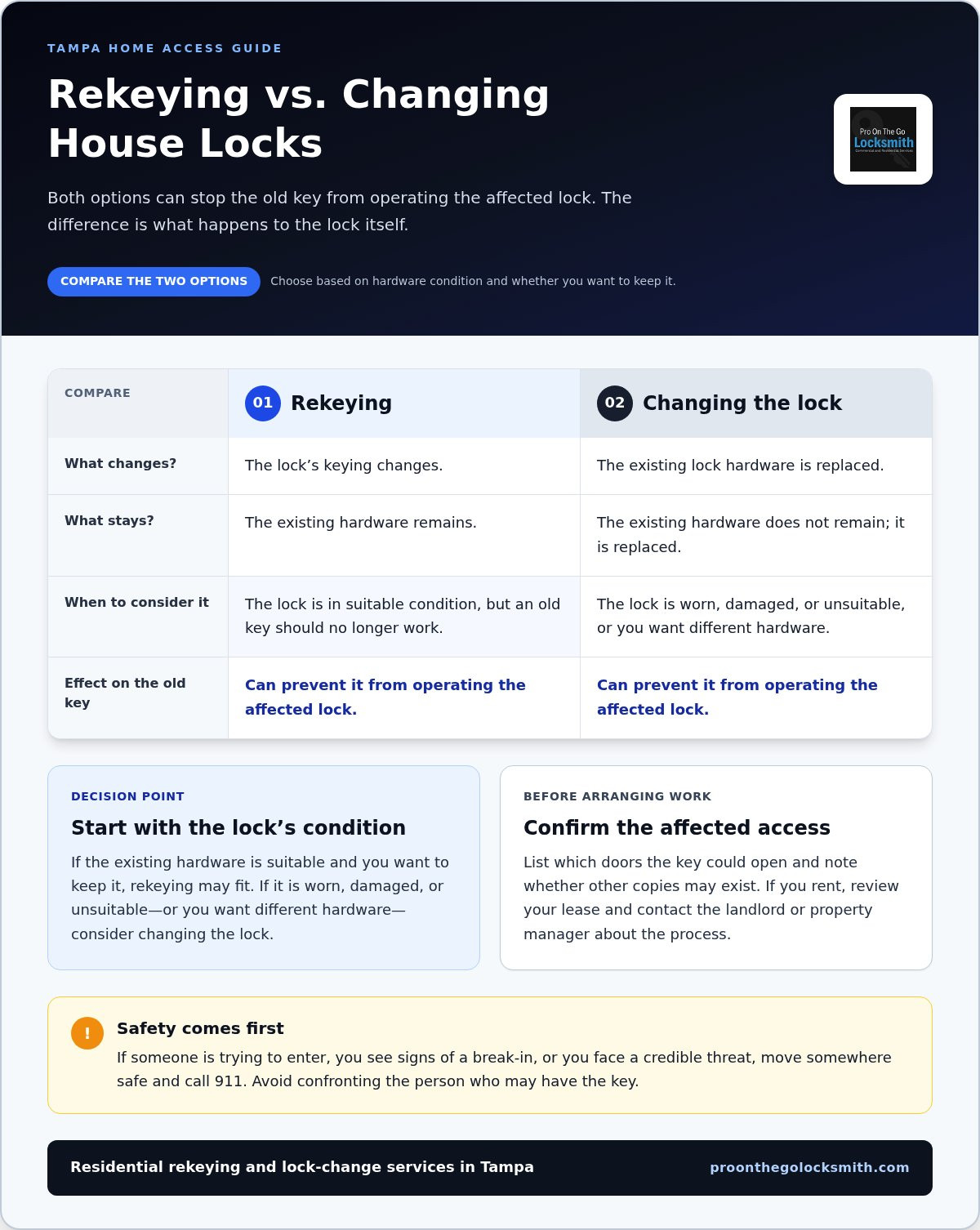
Once you’ve identified the door or doors involved, decide whether you need to change the lock’s keying or replace the hardware. Both options can prevent the old key from operating the affected lock, but they address different needs. The lock’s condition and whether you want to keep the existing hardware are useful decision points.
How does rekeying make the old key stop working?
A keyed lock is set up to operate with a particular key. During rekeying, a locksmith changes the lock’s internal keying so it works with a new key instead. The existing hardware generally stays on the door, but the old key should no longer operate that rekeyed lock. You’ll use new keys afterward.
Rekeying addresses access through the specific lock without replacing all its hardware. If multiple doors or locks are involved, identify each one so the work covers the right entry points. Afterward, test the new key in each rekeyed lock and keep track of who receives copies.
When might changing the lock make more sense?
Rekeying changes access, not the physical condition of a lock. If the hardware is worn, damaged, or no longer suitable for the door, replacement may be more practical. You might also choose a different lock for hardware or functionality that better fits your needs.
Neither option is automatically best. A working lock in good condition may be suitable for rekeying; a compromised or unsuitable lock may call for replacement. Match the solution to the door, the lock’s condition, and your access needs. New hardware alone does not guarantee security.
If you’re asking “someone has a key to my house what to do Tampa,” use the lock’s condition to guide the decision: rekey suitable hardware to change which key operates it, or replace hardware when it needs changing. Read this guide to rekeying vs. changing locks for a closer comparison. Pro On The Go Locksmith provides residential rekeying and lock-change services in Tampa.
A Practical Tampa Home-Security Checklist After a Key Is Unaccounted For
A short checklist turns uncertainty into useful details for a residential locksmith. Note what you know, check other access points if it’s safe, and identify who can authorize work if you rent or share the property. You don’t need to resolve every access concern before arranging service, but clear information helps focus the assessment.
What should you check around the home?
Exterior doors: List the front, side, and patio doors, plus any garage entry door. Note which locks may use the missing key.
Other entry points: Consider gates, outbuildings, and shared entrances if the key or other household keys provide access to them.
Household copies: Record which keys are missing, retained, or accounted for, and who may have copies.
Lock condition: Note each affected lock’s location and any visible damage or unusual signs. Don’t delay urgent help to inspect a door if you feel unsafe.
Other entry methods: If the home uses access codes or another entry method, note who can use them and whether they need separate attention.
What information helps prepare for residential lock service?
Gather the Tampa service address and identify the affected doors. Explain whether a key was lost, lent, copied, or not returned, and mention any visible lock damage or access concern. Share only the details needed to explain the situation; don’t include sensitive codes or unnecessary personal information in a message.
If you rent or share ownership, review the lease or property process and arrange any required approval from the owner or property manager before authorizing a rekey or lock change. Having authorization ready can clarify the next step without mixing a security concern with a disagreement about property access.
A locksmith can assess the affected locks and discuss whether rekeying or replacement suits their condition and your access needs. Pro On The Go Locksmith provides residential lock rekeying and lock changes in Tampa, with mobile service during business hours. To arrange Tampa residential lock service, share the relevant door and key details when requesting service.
If you’re researching “someone has a key to my house what to do Tampa,” use this checklist to organize the facts: which locks are involved, which keys are unaccounted for, and who can approve the work. That preparation helps keep the next steps focused.
Restore Key Control With a Tampa Residential Locksmith
Once you’ve identified the doors that may be affected and who can authorize work, consider whether the existing lock still suits the door. If it’s in suitable condition, rekeying changes which key operates it while leaving the hardware in place. If the lock is worn, damaged, or no longer fits your needs, a lock change may be more appropriate.
Pro On The Go Locksmith provides residential rekeying and lock changes in Tampa. During a mobile service visit in business hours, a locksmith can review the affected lock and discuss an option based on its condition, the door, and your access concern. The plan should make clear which lock is being addressed and what the selected work means for the old key.
What happens during a residential locksmith visit?
Identify the doors the missing or unreturned keys may open. The locksmith can assess the relevant lock and explain whether rekeying or replacement better suits the hardware. If rekeying is appropriate, the lock’s keying changes so the previous key should no longer operate it. If the hardware needs to change, replacement addresses the lock itself. You’ll know which option is planned and how it affects access before proceeding.
Clear details help keep the visit focused. Point out visible damage, list the affected entry points, and have any required property authorization ready. If more than one lock may use the same key, identify each one so the discussion covers all the access points you’re concerned about.
How can Tampa residents take the next step?
Arrange residential locksmith service through Pro On The Go Locksmith’s mobile service in Tampa during business hours. Provide the service address, the affected doors, and whether the key was lost, retained, or may have been copied. If you rent or share the property, have the relevant authorization in place before requesting lock work.
If you’re still asking “someone has a key to my house what to do Tampa,” focus on restoring control without choosing more work than the lock requires. Rekeying can address an old key when the hardware remains suitable; replacement is worth considering when the lock itself needs to change. Contact Pro On The Go Locksmith to arrange residential rekeying or lock-change service in Tampa.
Take the Next Step Toward Secure Key Access
If you’re still asking “someone has a key to my house what to do Tampa,” keep the plan simple: prioritize safety, identify which doors the key may open, and choose a lock solution that suits the hardware. Rekeying can make the old key stop operating a suitable existing lock; replacement is an option when the lock itself needs changing.
Pro On The Go Locksmith provides residential rekeying and lock-change services in Tampa, with mobile locksmith service during business hours. Identify the affected locks and arrange the service that matches your home’s needs.
Arrange residential locksmith service in Tampa to take a practical step toward regaining control of who can enter your home.
Frequently Asked Questions
Someone has a key to my house in Tampa. What should I do first?
Put your immediate safety first: if someone is trying to enter, threatening you, or has broken in, move somewhere safe and call 911. Don’t confront the key holder. If there’s no immediate danger, identify which doors the key may open and whether copies could exist. If you’re searching “someone has a key to my house what to do Tampa,” start with those facts, then arrange a suitable lock solution.
Should I rekey or change my locks if someone has a key to my house?
Rekeying may suit a lock that’s in good condition when your main concern is disabling an old key. It changes the lock’s keying while keeping the existing hardware. Consider changing the lock if it’s worn, damaged, unsuitable for the door, or you want different hardware or functionality. The right choice depends on the lock’s condition and your access needs, not simply on the fact that a key is unaccounted for.
Does rekeying a house lock make the old key stop working?
Yes. Rekeying changes the internal keying so the lock operates with a new key, and the previous key should no longer operate that rekeyed lock. The existing hardware generally remains in place. This applies only to the locks that are rekeyed. If the missing key could open locks on several doors, identify each affected lock so the work addresses those entry points.
Can a landlord change the locks if a tenant has not returned a key in Florida?
A landlord shouldn’t use a lock change to prevent a tenant from entering their home without a court-ordered eviction. Florida law prohibits that kind of lockout. An unreturned key is a separate access concern: the landlord and tenant should use the property’s proper process to address it while preserving authorized access. If there’s a dispute about permission or access rights, seek guidance from a qualified Florida legal professional.
Should I change every lock if one house key is missing?
Not necessarily. First determine which locks the missing key could operate, including side doors, garage entry doors, or other locks that may share its keying. Locks the key can’t operate may not need attention for this specific concern. If you can’t tell which locks are affected or whether copies exist, list the home’s entry points and discuss the uncertainty with a residential locksmith.
How quickly should I rekey my house after someone keeps a key?
Arrange rekeying promptly if you believe someone may use the key without permission, especially if the key is connected to identifying information about your home. If there’s an active threat or attempted entry, leave the area and call 911 rather than waiting for lock service. For a non-urgent concern, gather details about the affected doors and arrange residential locksmith service during business hours.
Can a locksmith rekey a house lock without replacing the hardware?
Yes. Rekeying generally changes a suitable lock’s internal keying while leaving its existing hardware on the door. The locksmith can assess the lock and explain whether rekeying fits its condition and your needs. If the hardware is damaged, worn, or unsuitable, changing the lock may be a better option. Pro On The Go Locksmith provides residential rekeying and lock changes in Tampa.


