
Rekeying Locks for New Tenants in Tampa: Landlord Turnover Checklist

What if the brass keys your departing renter handed back at move-out are only one of several working duplicates still circulating around town? Handing those same keys to incoming residents exposes your investment to serious premises liability risks under Florida habitability rules. Proper rekeying locks for new tenants Tampa rentals require doesn't mean discarding solid architectural deadbolts or damaging existing door frames. By simply repinning the internal cylinder wafers, you instantly retire old copies and lock out prior vendors while preserving your quality exterior hardware.
Coordinating tight turnovers during standard business hours is demanding, especially when you need complete certainty that unauthorized access is fully cut off. Follow this definitive checklist to rekey rental locks efficiently, ensure Florida tenant safety, and protect property investments. We will walk through Florida security expectations, break down why rekeying beats hardware replacement, and show you how to structure master key systems for effortless multi-unit management before move-in day arrives.
Table of Contents
Why Rekeying Locks Between Tenants Is Vital for Tampa Rentals
A lease turnover isn't complete simply because the outgoing tenant leaves a set of keys on the kitchen counter. Physical keys are easily duplicated at automated retail kiosks across Hillsborough County, creating unmonitored access points to your rental asset. For property managers and independent owners, professional rekeying locks for new tenants Tampa properties require establishes an indisputable baseline of security before any lease begins.
Eliminating the Duplicate Key Hazard
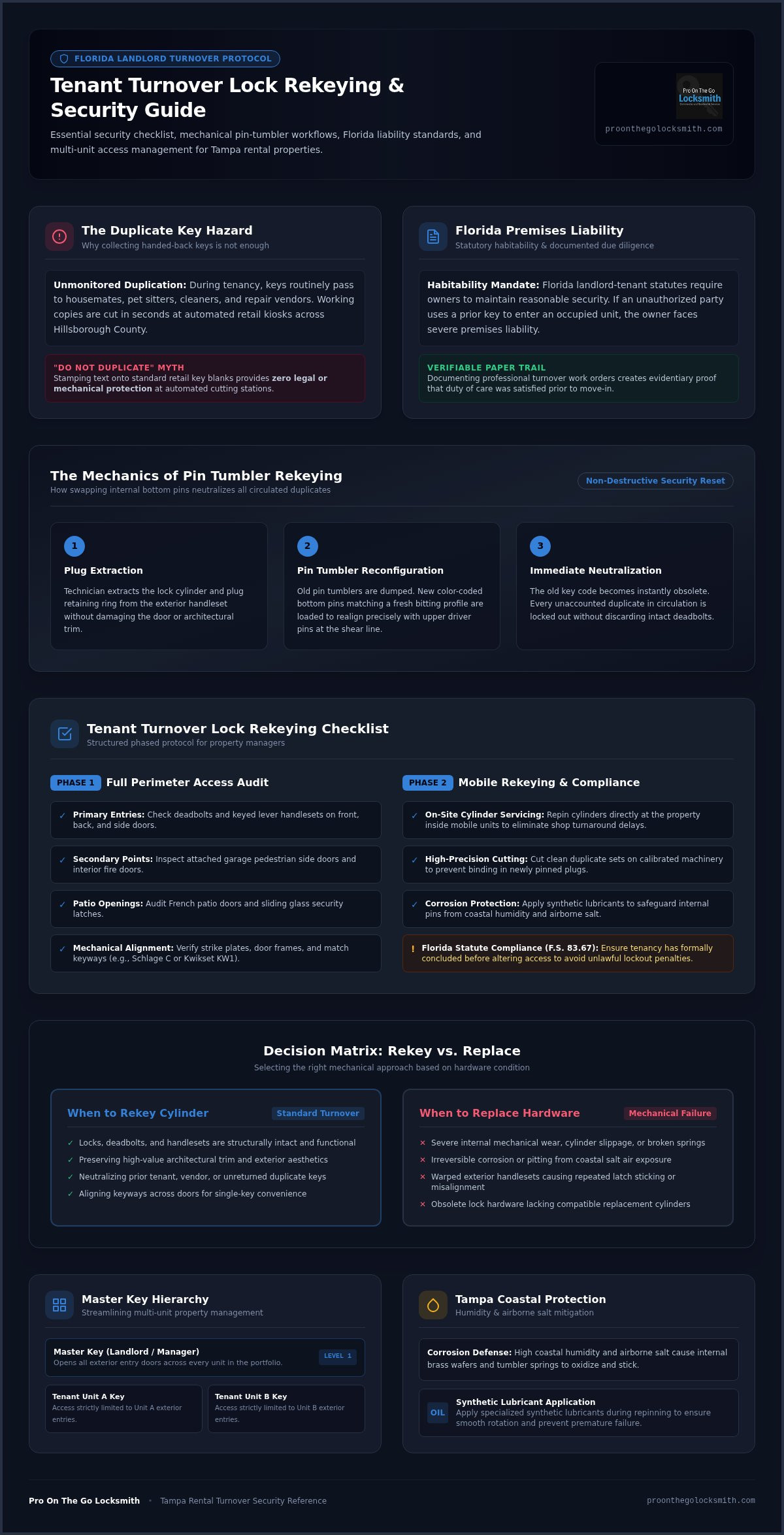
During a typical tenancy, keys pass through dozens of hands. Housemates, pet sitters, cleaners, and emergency repair vendors often receive copies that never get logged or returned. Stamping "Do Not Duplicate" onto a standard retail key blank provides zero legal or mechanical protection at modern automated cutting stations. Anyone can cut a working clone in seconds.
Understanding how pin tumbler locks work clarifies why collecting the original keys is insufficient. Inside the brass cylinder, a series of bottom pins and upper driver pins must align precisely along the shear line to permit rotation. When a technician extracts the plug and swaps the bottom pins for new lengths, the old key code becomes completely obsolete. Every unaccounted copy circulating across the city is neutralized immediately, restoring total physical access control without the expense of discarding intact locksets.
Florida Premises Liability and Duty of Care
Under Florida landlord-tenant statutes, property owners must maintain common safety standards and provide reasonable security for habitability. If a prior occupant or an unauthorized individual uses an old key to enter an occupied unit and commit a crime, the landlord faces severe premises liability exposure. Courts frequently scrutinize whether management exercised reasonable care during the turnover window.
Handing over unverified locks leaves you legally vulnerable. Documenting professional work orders creates a clear evidentiary paper trail demonstrating due diligence. Much like commercial fleets rely on certified mobile technicians for critical services like automotive locksmith tampa support, property owners need verifiable documentation for exterior entry doors. Carrying out structured rekeying locks for new tenants Tampa rentals undergo during scheduled turnover windows confirms that your duty of care has been fully satisfied before move-in day.
The Essential Landlord Lock Rekeying Checklist for Tenant Turnover
Executing an organized mechanical overhaul protects your incoming residents and avoids costly turnover delays. Instead of treating lock servicing as an afterthought, follow this phased turnover protocol to ensure every door operates smoothly before handing over keys.
Phase 1: Full Perimeter Access Audit
Start by identifying every entry point securing the rental envelope. Never limit your inspection to the front entrance:
Primary deadbolts and keyed lever handlesets on front, back, and side entries
Attached garage pedestrian side doors and interior fire doors
French patio doors and sliding glass security latches
Check for misaligned strike plates, warped frames, or sticking latches. Note whether all locks share matching keyways, like standard Schlage C or Kwikset KW1. Aligning keyways during rekeying locks for new tenants Tampa rentals require allows one master key to access the entire property.
Phase 2: Mobile Rekeying and Pin Reconfiguration
Once you audit the entry points, extract the internal lock cylinders rather than ripping out decorative trim and handles. An on-site technician removes the plug retaining ring, dumps the old pin tumblers, and loads new color-coded bottom pins matching a fresh bitting profile. Before scheduling this step, ensure the previous tenancy has formally concluded. Reviewing the Florida Statute on landlord lock changes clarifies that altering access before formal vacancy constitutes an unlawful lockout.
High-precision key duplication machinery inside a fully equipped mobile unit ensures clean cuts without jagged edges. Once reassembled, the technician tests the cylinder plug rotation to ensure complete mechanical fluidness before reinstalling the core into the door.
Phase 3: Key Custody and Testing Protocol
Test the new keys thoroughly with the door open and then completely shut. Latch binding often occurs only when the weatherstripping compresses against the door jamb. The deadbolt must throw smoothly into the strike pocket without requiring users to push, pull, or lift the door slab.
Prepare the physical inventory: two operating keys for the leaseholder, one emergency backup for property management, and any secondary copies required by your lease agreement. Securely record the key bitting depths in your internal property management database for future reference. If you notice severe internal mechanical wear during your initial inspection, take a moment to explore our guide on rekey vs change locks to evaluate whether full hardware replacement makes better economic sense.
Rekeying Existing Locks vs. Replacing Complete Hardware Sets
Property owners often default to buying entirely new locksets at home improvement centers whenever a tenant departs. This approach wastes usable materials and inflates operating expenses. When performing rekeying locks for new tenants Tampa investors preserve structural integrity while achieving total access control.
When Cylinder Rekeying Is the Smarter Choice
Rekeying is the preferred diagnostic solution when exterior locks remain mechanically sound. By replacing only the internal bottom pins, you bypass the expense of buying new decorative levers, solid brass deadbolts, or commercial mortise assemblies. The procedure preserves your existing architectural styling and avoids leaving exposed screw holes, mismatched paint lines, or weathered footprints on the exterior door slab.
Servicing multiple entryways during a single scheduled appointment streamlines labor dramatically:
A mobile technician adjusts internal pins in minutes without disturbing door strike alignment
All exterior deadbolts can be pinned to a single keyway, eliminating oversized key rings for new residents
Retaining intact escutcheons keeps exterior aesthetics completely uniform across multi-family properties
When Complete Lock Replacement Becomes Unavoidable
Certain physical wear patterns demand hardware removal. Salt air and severe storm exposure across the Tampa Bay area frequently degrade zinc internal components over time. If a cylinder plug exhibits severe radial play, internal cams are stripped, or the bolt mechanism binds inside the housing, repinning won't restore long-term security. Replacing the hardware is the only safe move.
You should also swap entire units when replacing low-grade residential knobs that lack ANSI/BHMA Grade 2 deadbolt security standards. Builders often install builder-grade hardware that offers minimal kick-in resistance. If an existing unit features obsolete or discontinued keyways that can't be serviced with standard brass pin kits, upgrade to a commercial-grade lockset. Otherwise, standard rekeying locks for new tenants Tampa rentals undergo remains the most efficient, cost-effective path to perimeter security.
Tampa Environmental Factors and Master Key Systems for Rentals
Operating rental properties along the Gulf Coast introduces distinct mechanical challenges that interior-focused turnover guides overlook. Between persistent humidity and intense summer heat, locks in Hillsborough County face non-stop environmental stress. Planning an intentional turnover includes diagnosing regional weather wear and engineering clean key management structures across your multi-unit portfolios.
Managing Coastal Weather Impact on Tampa Door Locks
Salty coastal air and frequent summer storms accelerate metal degradation. Inside standard lock cylinders, fine brass shavings interact with airborne moisture, generating a chalky green oxidation that binds internal springs. When pins lock up, keys stick or break off entirely.
Avoid powdered graphite entirely on Florida properties. While common in drier climates, graphite combines with local atmospheric moisture to create a thick, abrasive paste that gums up cylinder chambers. Technicians rely exclusively on PTFE or silicone-based dry lubricants to shed moisture without attracting road grit. In addition, intense direct sunlight expands wooden and composite exterior doors, pushing deadbolt bolts out of alignment with strike plates. Realignment during turnover prevents premature motor or mechanical failure.
Master Key Architectures for Multi-Family Rentals
Managing small multi-family assets like duplexes, triplexes, or quadplexes doesn't mean carrying dozens of loose keys. A well-designed master key architecture grants distinct access tiers using specialized pin tumbler splits:
Tenant Change Keys: Each resident's key operates only their private perimeter deadbolts and entry levers
Landlord Master Keys: A single passkey provides management access across all doors for routine maintenance and safety inspections
Common Entry Cylinders: Laundry areas or shared storage doors can be pinned to accept every tenant key alongside the master
Executing this system requires meticulous mathematical calculation. Amateur pinning creates "cross-keying" ghost cuts, where a neighbor's key accidentally trips a secondary shear line in an adjacent unit. Professional master keying calculates exact pin increments to preserve high pick resistance and total unit privacy. When managing turnover across multiple doors, professional residential lock rekeying ensures correct master pin stacking and restores dependable access control before your next lease takes effect.
Taking the time to implement professional rekeying locks for new tenants Tampa investments require protects your doors from coastal friction while eliminating key ring clutter once and for all.
Scheduling Professional Mobile Lock Rekeying Across Tampa
Hauling hardware across town to a retail storefront wastes valuable hours during a tight property turnover. Stripping deadbolts off your doors leaves the unit vulnerable while you sit in traffic on I-275 or the Selmon Expressway. Coordinating mobile on-site service eliminates this friction entirely, bringing factory-grade repinning tools directly to your curb whether your properties are located in South Tampa, Ybor City, or Carrollwood.
The Convenience of On-Site Mobile Locksmithing
Mobile locksmith vans operate as self-contained mechanical workshops. Instead of forcing you to remove handlesets, a technician disassembles cylinders, repins the plugs, and cuts new operating keys right outside the rental property. Each cylinder receives precise pin adjustments and clean synthetic lubrication before reinstallation.
You get immediate, hands-on verification before the technician packs up. The technician walks the exterior perimeter with you, checking every newly cut key with the doors both open and latched. Property management teams overseeing company fleet vehicles can also coordinate lock adjustments alongside our specialized automotive locksmith Tampa solutions during scheduled visits. Consolidating your turnover needs into a single service window keeps your operations running on time.
Securing Seamless Turnovers with Pro On The Go Locksmith
Perimeter security demands licensed, accountable execution. Operating under Florida license #HCLOC23013, our technicians bring extensive diagnostic expertise across standard deadbolts, master key layouts, and high-security keyways. We provide transparent, scheduled appointments during regular business hours to match tenant lease start dates and prevent vacant days on your calendar.
Never let unaccounted duplicate keys compromise your rental investment or expose your business to premises liability claims. By scheduling professional rekeying locks for new tenants Tampa landlords trust, you restore complete access control without the expense of replacing intact hardware. Partner with Pro On The Go Locksmith to complete your turnover checklist with mechanical precision and complete peace of mind.
Streamline Your Rental Turnovers with Verified Security
Securing rental doors between leases doesn't require expensive hardware replacements or complicated logistics. Repinning internal cylinders protects your property against unaccounted duplicate keys, ensures full compliance with Florida tenant habitability standards, and shields your business from premises liability. Paired with humidity-resistant maintenance and organized master key layouts, routine mechanical resets keep your turnover operations running smoothly.
When preparing for incoming residents, professional rekeying locks for new tenants Tampa property managers trust delivers absolute security without the hassle of retail storefront delays. Pro On The Go Locksmith brings fully equipped mobile workshops to pin all major lock brands directly at your property during regular business hours. Operating under Florida license #HCLOC23013 with decades of combined technical experience, our team ensures every deadbolt throws cleanly and seats securely. Schedule your tenant turnover rekeying with Pro On The Go Locksmith today, and hand over your next set of keys with complete confidence.
Frequently Asked Questions
Can a landlord in Tampa rekey a lock without replacing the existing hardware?
Yes, landlords can completely rekey their locks without discarding the exterior handlesets or deadbolts. A mobile locksmith removes the internal cylinder plug, discards the existing bottom pins, and inserts new pins cut to a fresh key code. This process resets your mechanical access immediately while preserving your existing architectural trim. For landlords prioritizing cost-effective rekeying locks for new tenants Tampa properties undergo, repinning intact cylinders avoids the waste and labor of total lock replacements.
Is a landlord legally required to rekey locks between tenants in Florida?
Florida statutes do not explicitly mandate lock changes by statute number, but state habitability laws require landlords to maintain reasonable security protections. Failing to rekey between occupancies exposes property owners to serious premises liability claims if an unauthorized intruder enters using an unreturned duplicate. Performing documented lock rekeying during turnover demonstrates legal due diligence under Florida residential landlord-tenant obligations and confirms that past tenants or service contractors no longer hold viable keys.
How many keys should a landlord provide to incoming tenants after rekeying?
Landlords typically issue two working keys per leaseholder named on the rental agreement. Providing two copies ensures the tenant has an everyday key and an immediate spare for emergencies. Property managers should also cut and retain one management copy for authorized maintenance access and emergency inspections. Logging the exact number of issued keys on your move-in checklist establishes clear tenant accountability when lease agreements terminate and keys must be returned.
How long does a professional mobile locksmith take to rekey a rental home?
A professional mobile locksmith typically completes a standard three-door single-family home in approximately 30 to 60 minutes. Service times depend on the number of exterior cylinders, door alignment conditions, and whether keyways require matching. Because mobile workshops handle pin extraction and precision key duplication right at your curb during regular business hours, the entire turnover process finishes promptly without requiring landlords to remove hardware or leave properties unsecured.
Can all exterior locks on a rental property be rekeyed to a single key?
Yes, exterior locks can share a single operational key if they share compatible cylinder keyways, such as standard Schlage or Kwikset channels. A technician pins front deadbolts, back doors, and garage access points to match one uniform bitting pattern. If your property features mismatched hardware brands across different entries, a mobile technician can replace select cylinders to create streamlined single-key access across the entire perimeter during your scheduled turnover.
What is the difference between rekeying a lock and master keying a property?
Standard rekeying reconfigures a lock cylinder so that only one unique operating key rotates the plug. Master keying introduces split master wafers into the cylinder chambers, creating two distinct operating shear lines. This allows an individual tenant key to operate their specific unit door while permitting a master key held by management to open every lock on the building. Master key architectures streamline inspections across multi-unit duplexes, quadplexes, and apartment communities.
Why should graphite lubricant be avoided on locks in Tampa's climate?
Powdered graphite should never be used on rental hardware exposed to Tampa's intense coastal humidity and summer rains. Fine graphite particles absorb moisture from the humid air, turning into a thick, gunky sludge that binds brass tumbler pins and collapses delicate cylinder springs. Technicians working on rekeying locks for new tenants Tampa properties require apply dry PTFE or silicone sprays instead, which repel ambient moisture and lubricate internal components without clumping.


