
Is It Safe to Rekey Locks Instead of Changing Them in Tampa?

A new lock isn’t always the safer choice. If you’re asking, “is it safe to rekey locks instead of changing them Tampa?” the answer depends on whether you’re concerned about an old key still working or a lock that no longer operates reliably. Rekeying changes which keys operate the existing lock. It doesn’t repair worn, damaged, or unsuitable hardware.
It’s reasonable to worry that a former owner, tenant, or someone who found a lost key could still enter. If the lock works properly, rekeying can restore control over who has access without replacing the hardware. But if an exterior lock sticks, shows corrosion, or is damaged, have its condition assessed before deciding. Tampa’s humid conditions make hardware condition an important part of the decision.
This guide explains what rekeying changes, when replacing a lock may be more suitable, and what to ask a Tampa locksmith before approving service. You’ll be able to weigh key control against the condition of your locks and decide what to ask about your home.
Table of Contents
Is it safe to rekey locks instead of changing them in Tampa?
How does lock rekeying work, and does it make old keys useless?
Rekeying vs. changing locks: which option is safer for your situation?
What should Tampa homeowners check before choosing rekeying?
How can a Tampa locksmith help you choose between rekeying and replacement?
Is it safe to rekey locks instead of changing them in Tampa?
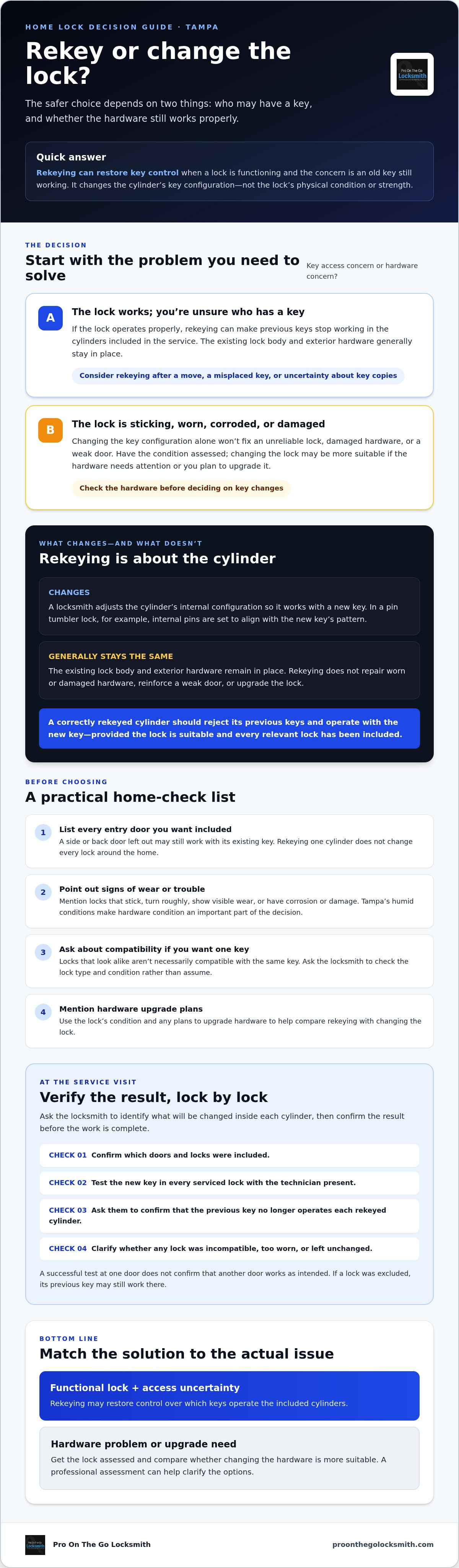
Yes, rekeying can be a safe choice when the lock works properly and your concern is who may have a key. A locksmith changes the cylinder’s internal configuration so previous keys no longer operate it. The existing lock body and exterior hardware generally stay in place, and a new key is matched to the updated configuration.
That distinction matters: rekeying changes who can use the keys, not the physical condition or strength of the lock and door. It won’t repair a sticking or worn lock, reinforce a weak door, or upgrade the hardware. For a foundational overview, see How lock rekeying works. The practical question is whether old keys should be disabled and whether the existing hardware is suitable to keep.
What does rekeying change, and what stays the same?
The lock stays installed while a locksmith alters the cylinder configuration to work with a new key. This may suit a functional lock when access needs to change, but compatibility depends on the lock type and condition. A professional assessment can help determine whether the cylinder can be rekeyed properly. If the lock is damaged or unreliable, changing its key configuration alone won’t address the problem.
When can rekeying restore control over who has access?
Rekeying is commonly considered after moving into a home, misplacing a key, or becoming unsure how many copies exist. It can stop previous keys from operating the cylinders that are rekeyed. The result depends on which locks are included. If a side or back door is left out, its existing keys may still work there.
Before arranging service, identify every entry door you want included and mention locks that stick, turn roughly, or show visible wear. If you want one new key to work across multiple locks, ask the locksmith to check compatibility. Locks that look alike aren’t necessarily compatible. Rekeying also doesn’t address separate issues, such as a damaged door or an entry point not included in the work.
If you’re asking, “is it safe to rekey locks instead of changing them Tampa?” consider both key control and the lock’s condition. Pro On The Go Locksmith lists residential rekeying and lock changes in Tampa, so the appropriate option depends on an assessment of the existing hardware. The company also lists Tampa automotive locksmith services, which are separate from home lock work.
How does lock rekeying work, and does it make old keys useless?
Rekeying changes a lock cylinder’s internal configuration so it accepts a new key instead of the previous one. The cylinder is the part of the lock that accepts the key. A locksmith assesses the lock, adjusts its internal components, and checks that the new key operates it correctly. The process depends on the lock type, and not every lock uses the same design.
What happens inside a rekeyed lock?
A pin tumbler lock offers one example: its internal pins are set to align with a new key’s pattern. Other lock designs may work differently. In either case, rekeying focuses on the cylinder, not the full lock assembly or the door. The result depends on the lock being compatible and in suitable condition, so ask the technician to identify any wear or limitations before work begins.
A correctly rekeyed cylinder should reject its previous keys and operate with the new key, provided every relevant lock has been included. If one key used to open both the front and back doors, rekeying only the front lock won’t change access to the back door. Likewise, locks that look alike aren’t necessarily compatible with the same key. Ask the locksmith to confirm compatibility rather than assume one key will work across them.
How can you verify the rekeying worked?
Before the technician finishes, ask them to test the new key in each serviced lock and confirm that the previous key no longer operates it. A successful test at the front door doesn’t confirm that the back door or another included entry works as intended.
Confirm which doors and locks were included in the service.
Test the new key in every serviced lock with the technician present.
Ask whether any lock was incompatible, too worn, or left unchanged, and what that means for old-key access.
This final check helps catch omissions and clarify the result. If a lock was excluded, its previous key may still work there. Rekeying one cylinder doesn’t change every lock around the home.
If you’re searching “is it safe to rekey locks instead of changing them Tampa,” the answer depends on the cylinder’s condition, which locks are included, and whether the keys pass the test. For a local option, you can learn more about Pro On The Go Locksmith and its residential rekeying services in Tampa.
Rekeying vs. changing locks: which option is safer for your situation?
Neither option is automatically safer. Rekeying can address who has a working key while keeping a serviceable lock in place. Changing a lock replaces the hardware and may suit you if the lock is damaged or you want different hardware. To answer “is it safe to rekey locks instead of changing them Tampa,” match the service to the concern rather than treating one option as right for every home.
When is rekeying a reasonable choice?
Consider rekeying when the lock works properly and your main goal is to invalidate earlier keys, such as after moving into a home or losing a key. Identify the exterior doors you want covered and ask whether each lock is compatible and in suitable condition. If you want one key to work across several locks, have that compatibility checked rather than assuming it.
When should you consider changing the lock instead?
A lock that sticks, shows visible damage, or operates inconsistently needs an assessment. Rekeying alone won’t fix those issues. Replacement may also make sense if you want to change the hardware. If you suspect someone tried to force entry or have a specific security concern, seek a professional assessment promptly so the lock and affected entry point can be evaluated.
The practical distinction is simple: choose rekeying for a key-control problem when the hardware is serviceable; consider replacement when it is damaged, unreliable, or due for an upgrade. A locksmith can inspect the lock and explain which option addresses the issue.
What should Tampa homeowners check before choosing rekeying?
Before booking service, gather details about key access and the condition of each lock. A clear list can prevent a door from being overlooked and help you understand what the proposed work will and won’t address. If your question is “is it safe to rekey locks instead of changing them Tampa,” use this checklist to prepare for an assessment rather than guessing from the key issue alone.
1. Identify the access concern. Note whether you’ve moved in, misplaced a key, or don’t know who may have copies. Describe which previous keys you want to stop working.
2. List the affected doors. Include front, back, and other exterior doors, plus any locks you believe share a key. Ask whether one new key can operate multiple locks, and have compatibility confirmed.
3. Check how each lock operates. Note sticking, rough turning, or difficulty inserting or removing the key. Don’t assume rekeying will resolve an operation problem.
4. Note visible damage or entry concerns. Mention damaged hardware or suspected forced entry so the technician can assess whether the lock or surrounding entry point needs attention.
What information should you give the locksmith?
Explain why access needs to change and identify every lock you want considered. If you’ve misplaced a key, say which doors it may have opened. If you’ve just moved in, clarify whether you want all exterior locks reviewed. Point out locks that share a key, but don’t assume they’re compatible. Describe any wear, sticking, visible damage, or previous entry concerns before the assessment.
What questions help you approve the right work?
Ask whether each existing lock is suitable for rekeying and which condition or compatibility factors affect the recommendation. Before authorizing service, confirm which doors are included, how the technician will test the new key and check that previous keys no longer work, and whether any lock may be excluded. Ask for limitations to be explained clearly, especially if a lock is too worn or needs a different approach.
Confirm service availability directly with the locksmith. Tampa-area scheduling and conditions at your property can vary, so check rather than assume a particular time or service option. A professional assessment can clarify the work before you approve it. To discuss residential rekeying or lock changes in Tampa, contact Pro On The Go Locksmith.
How can a Tampa locksmith help you choose between rekeying and replacement?
A locksmith’s assessment should connect your access concern to the hardware’s condition. If the lock works properly and the goal is to stop previous keys from operating it, rekeying may be suitable. If the lock is damaged, unreliable, or you want different hardware, replacement may be more appropriate. The specific lock and the result you want should guide the decision.
That’s the practical way to think about “is it safe to rekey locks instead of changing them Tampa?” Ask the professional to explain what the existing lock can support, which doors are included, and why the proposed work addresses your concern. Pro On The Go Locksmith lists residential rekeying and lock changes in Tampa as options, not one-size-fits-all solutions.
What should a professional assessment establish?
Ask the locksmith to identify the lock type, check how it operates, and explain whether its condition is suitable for rekeying. The assessment should clarify which doors will be serviced and how key access will change at each one. If replacement is recommended, ask what issue it addresses, such as damage, ongoing operation problems, or your preference for different hardware. Understand the reason before approving the work.
How should you confirm the job is complete?
Before the technician leaves, test the new key in every serviced lock. For each rekeyed cylinder, ask them to confirm that the previous key no longer operates it. Keep the new keys secure, and ask about any lock that was excluded or couldn’t be rekeyed. A clear final check shows what changed and where key access may remain unaffected.
For another perspective on choosing between these options, look for Rekey vs. Change Locks: A Professional Guide to Home Security. Then confirm the recommendation for your own doors and hardware rather than relying on a general rule. The right service should match the problem you’re trying to solve.
If you’re ready to discuss your home’s locks and the work that may fit, contact the Tampa locksmith team to ask about residential rekeying or lock changes.
Choose the right next step for your Tampa home
Rekeying can restore key control when the existing lock works properly. A lock change may be more suitable if the hardware is damaged, unreliable, or you want an upgrade. The answer to “is it safe to rekey locks instead of changing them Tampa” depends on both who may have a key and whether the lock is suitable to keep.
Before approving work, confirm which doors are included, whether the locks can be rekeyed as requested, and how the technician will test the new and previous keys. This helps clarify what has changed and whether any locks remain outside the work.
Pro On The Go Locksmith provides mobile locksmith services in Tampa and lists residential lock rekeying and lock changes among its services. To discuss your home’s locks and ask about available options, contact Pro On The Go Locksmith.
Frequently Asked Questions
Is it safe to rekey a lock instead of replacing it?
Yes, rekeying can be safe when the lock works properly and your main concern is who has a working key. A locksmith changes the cylinder configuration while leaving the existing hardware in place. If the lock sticks, is damaged, or operates unreliably, rekeying won’t fix that physical problem. For Tampa homeowners asking “is it safe to rekey locks instead of changing them Tampa,” the answer depends on both key access and lock condition.
Do old keys stop working after a lock is rekeyed?
Old keys should no longer operate a correctly rekeyed cylinder, while the new key should work in that lock. The change applies only to locks that were actually rekeyed. If one key previously opened several doors and only some cylinders are serviced, old keys may still work in the locks left unchanged. Ask the locksmith to identify every included door and test both new and previous keys in each serviced lock.
Is rekeying cheaper than changing locks?
Rekeying may cost less because it keeps serviceable lock hardware in place instead of installing replacement hardware. The actual quote depends on the locks, their condition, compatibility, and the number of doors included. Ask for the work scope and price before approving either option, and confirm whether any lock needs replacement. An assessment can help you compare the work involved without assuming rekeying is always less expensive.
When should I change a lock instead of rekeying it?
Consider changing a lock if it has visible damage, sticks, or operates inconsistently. Changing its key configuration won’t repair a mechanical problem. Replacement may also suit you if you want different hardware. If you suspect forced entry or have a specific security concern, arrange a professional assessment promptly. The technician can inspect the lock and affected entry point, then explain whether rekeying addresses the issue or a lock change is more appropriate.
Should I rekey my Tampa home after moving in?
Rekeying is worth considering after moving in if you don’t know who may still have keys or how many copies exist. List the exterior doors and locks you want included, then have their condition and compatibility assessed. If a lock is damaged or unreliable, ask whether replacement is more suitable. A professional can clarify which locks will be changed and how key access will differ afterward.
Can all the locks in my house be rekeyed to one key?
Possibly, but it depends on the type and condition of each lock. Don’t assume they’re compatible just because they look alike. Ask a locksmith to check every cylinder you want included and confirm whether one new key can operate them. Identify any locks that use a separate key today. If a lock can’t be rekeyed to match, ask what alternatives are available before authorizing the work.
How do I know if a Tampa locksmith rekeyed my locks correctly?
Before the technician leaves, test the new key in every serviced lock and ask them to confirm that the previous key no longer operates each rekeyed cylinder. Check every door included in the agreed scope. One successful test doesn’t verify another lock. Ask which locks, if any, were excluded or couldn’t be rekeyed, and keep the new keys secure. This final check clarifies the result and any remaining access limitations.


