
How to Secure a New Home in Tampa: A Step-by-Step Guide

What if the first security upgrade for your new Tampa home isn’t a camera or alarm, but taking control of every key and access code? You may not know how many copies previous occupants made, and deciding whether to rekey or replace the locks can feel like one more task during a busy move. If you’re wondering how to secure a new home in Tampa, start with access, then work outward.
A clear order makes the process manageable. Reset access first so you know who can enter, then check doors, windows, and other entry points to see where additional attention may be needed. Tampa’s humid, rainy climate also makes it useful to watch for wear on exterior hardware. For a separate vehicle-key need, see Tampa spare car key services.
This guide gives you a practical move-in checklist, explains when rekeying may be enough and when changing a lock makes more sense, and helps you prioritize upgrades around your home and routine. You can handle the essentials before or just after moving in without trying to do everything at once.
Table of Contents
How to Secure a New Home in Tampa Before You Move In
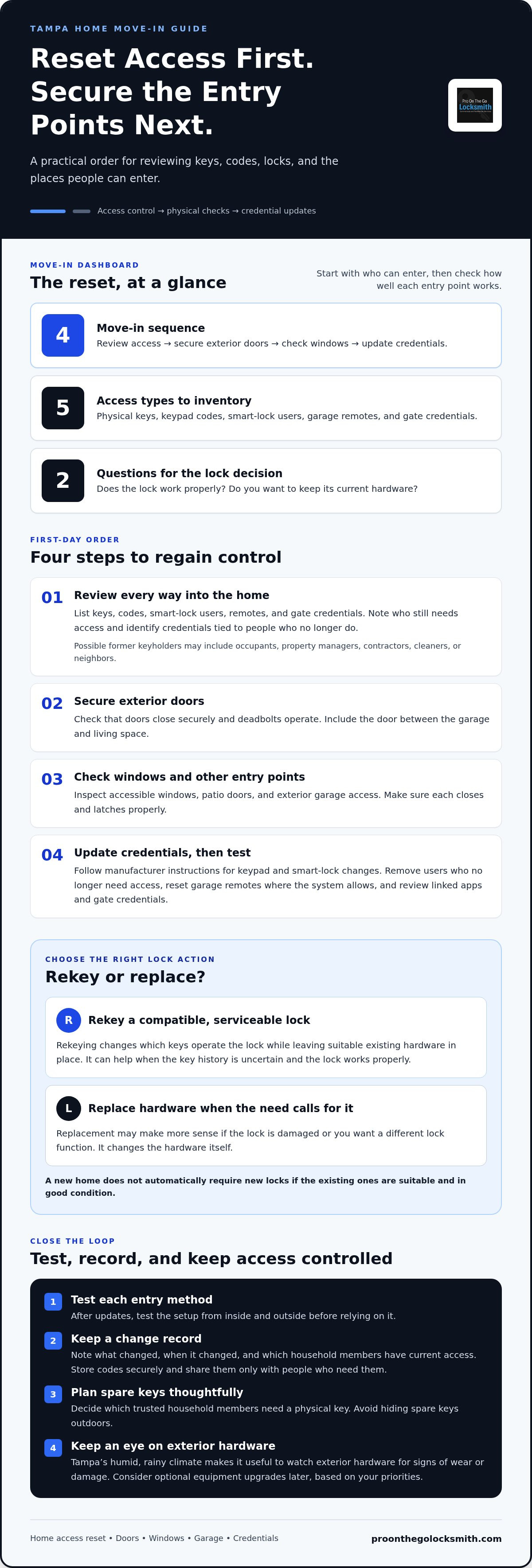
You may have received keys, keypad codes, garage remotes, or smart-lock access when you got the home, but that doesn’t tell you who else still has a copy or active credential. Former occupants, property managers, contractors, cleaners, or neighbors may have been given access. Start with a simple sequence: review every way into the home, secure exterior doors, check windows, then update codes and other credentials. This gives you a practical first-day plan before you consider optional equipment upgrades.
A move-in security reset means reviewing who can enter, which keys and codes still work, and whether the home’s entry points close and latch properly. It’s a practical first layer of physical security measures: identify existing access, check the barriers, and address gaps in a sensible order.
Who might still have access to a new Tampa home?
Don’t assume every key or access device was collected at handover. Make an inventory of physical keys, keypad codes, smart-lock users, garage remotes, and gate credentials. Note who currently needs access, then identify credentials linked to former occupants or people who no longer need entry. If you can’t tell who has a key, residential lock rekeying can change which keys operate a compatible lock without replacing its hardware.
What should you secure on move-in day?
Begin with exterior doors and any entry that connects directly to the home, including the door between the garage and living space. Check that doors close securely and deadbolts operate. Then inspect accessible windows, patio doors, and exterior garage access to make sure they close and latch properly. Address access control and basic function first. Consider cameras, alarms, and other upgrades later, based on your priorities.
After reviewing the entry points, update keypad and smart-lock credentials according to the manufacturer’s instructions. Keep a simple record of what you changed, when you changed it, and which household members have the current access details. That record helps prevent confusion as people settle in and gives you a reference if you add or remove a user later. Pro On The Go Locksmith provides residential lock rekeying and lock changes in Tampa.
For a separate vehicle-key need, the Tampa car key replacement page covers automotive access, which is distinct from securing a home.
How to Reset Keys, Codes, and Entry Access in a Tampa Home
Once you’ve inventoried the ways people can enter, reset each type of access separately. A physical key, keypad code, smart-lock user, garage remote, and access app may each require a different action. Keep a record of what you’ve changed and test each method afterward so you know which credentials still work.
Rekeying changes which keys operate a compatible lock; replacing a lock changes the hardware itself. Rekeying adjusts the lock’s internal configuration so old keys no longer operate it, while leaving suitable existing hardware in place. It can be a practical way to regain control after a move when the lock is in serviceable condition. For more detail on choosing between these options, read this guide to rekeying versus changing locks.
When does rekeying make sense after moving?
Rekeying may suit a compatible lock that works properly but has an uncertain key history. A residential locksmith can rekey it so keys held by previous occupants or other former keyholders no longer operate the lock. If the hardware is damaged or you want a different lock function, replacement may be a better fit. The right choice depends on the lock’s condition and the level of access control you want.
Which access codes and devices should you update?
Work through every credential connected to the home, not just the front-door keypad. Follow the manufacturer’s instructions for changing keypad and smart-lock codes, then remove users who no longer need access. Reset garage remotes where the system allows, review linked access apps, and update exterior keypad or gate credentials. Test the updated setup from both inside and outside before relying on it.
Keep a controlled spare-key plan: Decide which trusted household members need a physical key and how they’ll receive it. Avoid hiding spare keys outdoors.
Document the current setup: Store updated codes and access details securely, and share them only with people who need them.
Plan for disruptions: Keep essential household and emergency information accessible if a storm interrupts normal routines. FEMA offers guidance to prepare your home for hurricanes.
These steps bring the key, code, and device reset into one manageable process. Pro On The Go Locksmith provides residential lock rekeying in Tampa to help you regain control of household access as part of your move-in security plan. Learn more about Pro On The Go Locksmith’s residential lock rekeying service.
Rekey or Replace the Locks? Compare the Right Option for Your New Home
Choosing between rekeying and replacement comes down to two questions: does the lock work properly, and do you want to keep its current hardware? Rekeying changes which keys operate a compatible lock. Replacing it removes the existing lock and installs different hardware. A new homeowner doesn’t automatically need new locks if the current ones are suitable and in good condition.
Use this comparison to narrow down the decision as you plan how to secure a new home in Tampa:
Choose rekeying when the existing lock is suitable
If the lock works smoothly, has no visible damage, and meets your needs, rekeying may address uncertainty about old keys without replacing the hardware. Compatibility matters, and the lock’s condition affects whether this is a practical option. A residential locksmith can rekey a suitable lock so old keys no longer operate it.
Consider changing a lock when hardware needs an upgrade
Replacement may make more sense if a lock sticks, doesn’t operate reliably, shows damage, or lacks a function you want. Consider what would make daily use more convenient, such as a different locking method. Don’t assume any single feature guarantees a particular security result. For a deeper look at the decision, see a rekey-or-replace lock comparison.
There’s no universal winner. Pro On The Go Locksmith provides residential rekeying and lock changes in Tampa, helping homeowners address access concerns while considering the condition and function of their existing locks. Visit Pro On The Go Locksmith for residential lock options.
Check Doors, Windows, Garages, and Tampa Weather Exposure
After reviewing who can enter, walk the perimeter and check how each entry point works. A lock can’t compensate for a door that doesn’t close properly, a loose strike plate, or a window latch that won’t engage. In Tampa, heat, humidity, and rain can affect exterior hardware over time, so include visible wear and sticking mechanisms in your routine checks.
Which entry points deserve a close inspection?
Check front, side, rear, and patio doors. Close each one and test its lock. Look for loose hardware, damaged frames, or gaps that prevent a secure fit. Try accessible window and sliding-door latches, making sure they engage and the windows still open as intended. Include the garage-to-home door, exterior garage doors, and any side access. Address a faulty latch or damaged frame before spending on add-on devices.
Doors: Confirm they close securely and deadbolts operate smoothly.
Windows and patio doors: Check latches, tracks, and visible damage.
Garage access: Test the door connecting to the home and inspect other exterior entry points.
How should Tampa homeowners plan for weather exposure?
Check exterior doors, windows, and hardware periodically, especially after severe weather. Look for new damage, moisture, rust, or changes in how a door or lock operates. These observations can help you spot maintenance needs, but they don’t establish whether an opening meets building-code or insurance requirements. Treat those questions separately and use current official guidance for requirements.
Start with function and maintenance: repair loose hardware, address sticking locks, and make sure each door and window closes and latches. Then consider optional upgrades, such as better exterior lighting or monitored devices, according to your household’s priorities. Don’t assume a particular lock, camera, or other device is storm-proof without evidence for that specific product.
A careful perimeter review is a practical part of how to secure a new home in Tampa, but it doesn’t mean every opening needs an upgrade. If a residential lock is damaged or no longer works reliably, Pro On The Go Locksmith provides residential lock changes and rekeying in Tampa. Explore residential lock help as you address the entry points that need attention.
Build a Simple Home Security Routine and Get Help With Locks
A move-in reset is most useful when you keep it current. Add a brief security check to an existing household routine, such as before leaving for a trip or after someone finishes work at the home. The goal isn’t to inspect everything constantly. It’s to notice when access changes or a lock stops working as expected, then update your household’s plan.
What should go on a recurring home-security checklist?
Use a short checklist that household members can follow without needing to remember every detail:
Test the main entry points: Check that exterior doors close securely and locks operate properly. Confirm accessible windows and patio doors close and latch.
Review who has access: Remove codes or app access for former guests and workers when their authorized access ends. Collect garage remotes or keys when appropriate.
Keep household records current: Note who holds spare keys and store current codes and access instructions securely. Make sure the people who need those details can find them.
Reassess after changes: Review access after a household move, a change in who needs entry, or a repair that affects a door or lock.
That small routine turns the steps for how to secure a new home in Tampa into an ongoing practice. If a check reveals a sticking lock or a door that no longer closes properly, address the issue rather than relying on an extra device to compensate.
When can a Tampa locksmith help with a new home?
A residential locksmith can help when you want to reset access to compatible locks or replace existing hardware. Rekeying may fit a lock that works properly but has an uncertain key history. A lock change may be more appropriate for hardware that’s damaged, unreliable, or no longer suited to your needs. A locksmith can assess the lock and carry out the relevant residential service. Household checks and other security measures still have their own role.
With a current access record and a simple testing routine, it’s easier to keep track of who can enter and spot problems before they become more disruptive. Pro On The Go Locksmith provides residential rekeying and lock changes in Tampa. Learn more about residential lock help in Tampa.
Make Your New Home’s Security Plan Your Own
A clear move-in plan starts with access: review keys, codes, remotes, and app users, then reset credentials so you know who can enter. Next, check that doors, windows, and garage entry points close and lock properly. Choose between rekeying and replacing a lock based on its condition, compatibility, and the function you want.
That’s the practical path for how to secure a new home in Tampa without trying to upgrade everything at once. Keep a simple record of current access and revisit it when household needs change. If you need help regaining control of compatible locks or replacing worn or unsuitable hardware, Pro On The Go Locksmith provides residential lock rekeying and lock changes.
Take the next step at your own pace with residential lock help in Tampa. A few deliberate checks can help you settle in with greater confidence.
Frequently Asked Questions
What should I do first to secure a new home in Tampa?
Start by identifying who may have a key, code, garage remote, or other access credential. Then decide whether to rekey or replace exterior locks, update keypad or smart-lock credentials, and check doors, windows, and garage access. Make a short written checklist so everyone in the household can see what’s complete and what still needs attention. This order makes it easier to manage how to secure a new home in Tampa without missing an entry point.
Should I rekey or replace the locks when I move into a new house?
Rekeying may be suitable if the existing lock works properly and you want previous keys to stop operating it. Replacing the lock may make more sense if the hardware is damaged, unreliable, or doesn’t meet your needs. The right choice depends on the lock’s condition, whether it’s compatible with rekeying, and what you know about its access history. Assess the hardware before deciding; replacement isn’t automatically necessary.
Can a locksmith rekey locks in a new Tampa home?
Yes. A locksmith can rekey compatible residential locks so previous keys no longer operate them. Whether a specific lock can be rekeyed depends on its type, condition, and compatibility. Pro On The Go Locksmith provides residential rekeying in Tampa. After the work, test the new key in each rekeyed lock and keep track of who receives a copy. Rekeying addresses key access, but it doesn’t repair damaged doors or other entry points.
How do I secure a new home if I do not know who has spare keys?
Treat the key history as unknown and include access control in your move-in plan. Consider rekeying suitable locks or replacing hardware that needs attention, then update keypad codes, smart-lock users, and garage remotes. Don’t leave a spare key in an obvious outdoor hiding place. If you make new copies, record who receives them and store that information securely. This gives you a clear picture of current access instead of relying on assumptions.
What should I check on doors and windows after moving into a Tampa home?
Check that each exterior door closes securely and that its lock, frame, and hardware function as intended. Test accessible window and patio-door latches, inspect the garage-to-home entry, and note visible damage or loose fittings. Include weather exposure in routine property checks, particularly after severe weather. For specific storm-related recommendations, verify current guidance from an official source rather than assuming a particular lock or device is weatherproof.
Do I need to change smart-lock codes when I move?
Review the users and credentials on any keypad or smart lock during move-in, and change codes according to the manufacturer’s instructions. Remove users who no longer need access, then review connected accounts or apps. Test the updated setup to confirm it works. Remember that changing a smart-lock code doesn’t reset physical keys, garage remotes, gate credentials, or other entry devices, so include each one in your access review.
Is a locksmith enough to secure a new home?
No single service or device covers every part of home security. A locksmith can help with residential rekeying or lock changes, while a broader plan also includes checking doors, windows, garage access, lighting, and household routines. Start with access control and the condition of entry points, then consider other upgrades based on your home and priorities. Treat each measure as one part of the plan, not a guarantee that a property is secure.
For help rekeying or changing residential locks, contact Pro On The Go Locksmith for residential lock service in Tampa.


