
How to Program a Car Key: DIY vs. Professional Help

What if a newly cut key still can’t start your car? A key may fit the ignition or unlock the door, yet its electronic credential may not match the vehicle’s security system. Before you try to program a car key yourself, identify what kind of key you have and what the vehicle needs to recognize it.
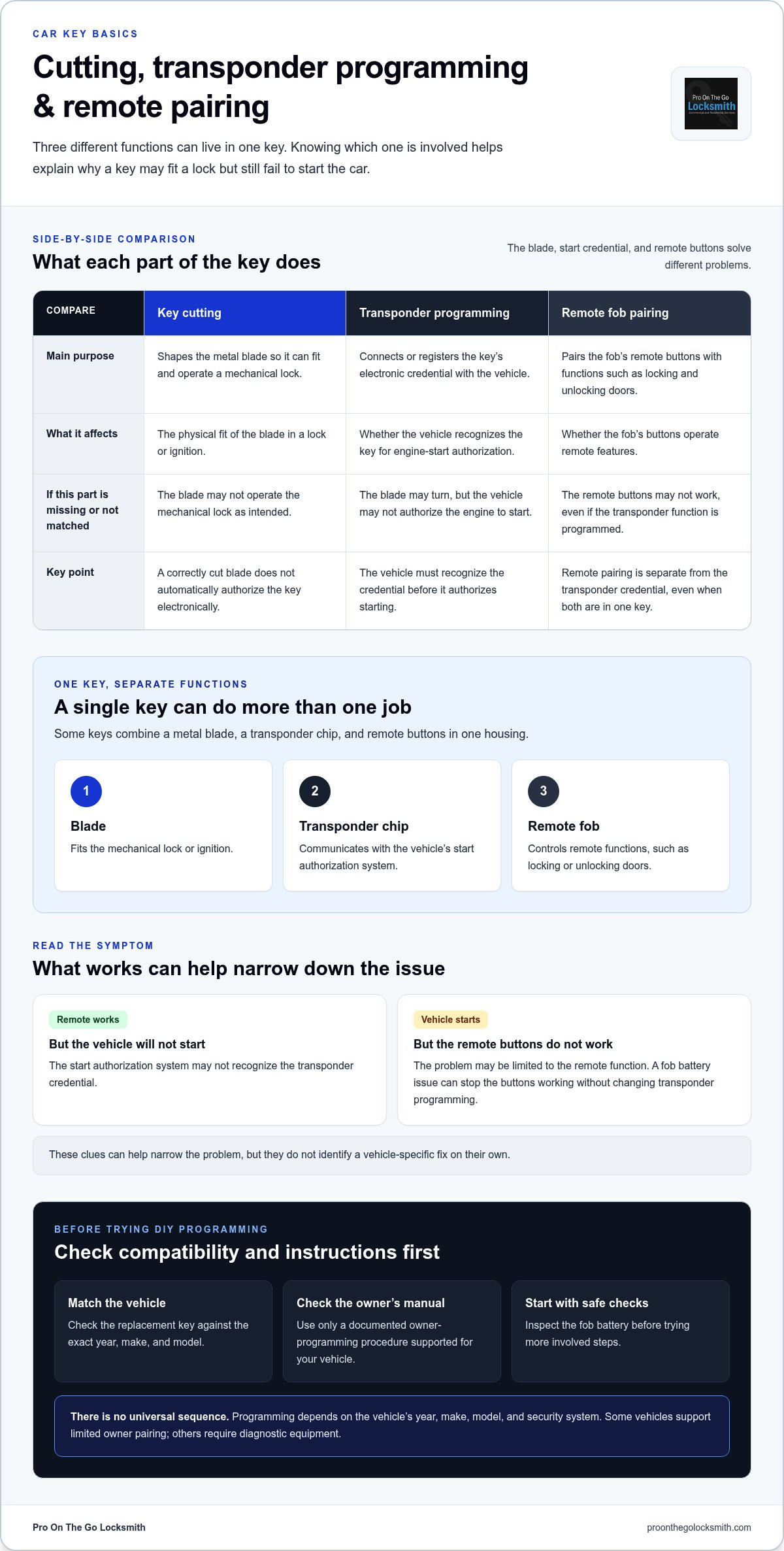
Key cutting and programming solve different problems. Cutting shapes the blade; programming connects the key’s electronic credential to the vehicle. The right process depends on the key and the car, so a method that works on one model may not work on another. A failed attempt can leave you with a key that still won’t start the vehicle.
This guide explains the difference between cutting, pairing, and programming, along with safe checks to try before arranging service. You’ll also learn when DIY steps may work and when professional help is the practical choice. If the key remains unresponsive, Pro On The Go Locksmith provides mobile key fob and transponder programming in Tampa, with the key and vehicle assessed together.
Table of Contents
What Does It Mean to Program a Car Key?
Car key programming pairs a key’s electronic credential with a vehicle’s immobilizer or access system so the vehicle can recognize and authorize it. Cutting shapes a metal blade to fit a lock; programming connects the key’s electronics to the vehicle. Depending on the key and vehicle, you may need cutting, programming, or both. There isn’t one universal procedure: the key design and process vary by year, make, model, and security system.
The electronic match matters because a vehicle may use a car immobilizer system to prevent an unauthorized key from starting the engine. A key that fits physically may still lack the credential the vehicle expects. This is why replacing a key isn’t always just a matter of copying its shape.
What Is the Difference Between a Transponder Key and a Key Fob?
A transponder key contains a chip that communicates with the vehicle’s start authorization system. A remote fob controls functions such as locking and unlocking the doors. Some keys combine both technologies in one housing, along with a metal blade. A single key may therefore need to fit the lock, operate remote functions, and be recognized before the engine starts.
These functions are related, but they aren’t interchangeable. A remote that locks the doors may not have a transponder credential the car accepts, and a key that starts the engine may not operate remote features. Identify which parts your key includes before trying to program a car key.
Why Can a Newly Cut Car Key Still Fail?
A correctly cut blade only confirms that its shape can operate a mechanical lock. It doesn’t automatically authorize the key electronically. A replacement may look like the original but contain an incompatible electronic credential, or its credential may not be paired with the vehicle. The blade might turn while the engine won’t start, or the remote buttons might not work.
Compatibility involves more than appearance. The vehicle’s year, make, model, and security system help determine which key design and programming approach are appropriate. For more on how transponder keys support vehicle security, read this transponder key guide.
How Car Key Programming Connects a Key to the Vehicle
Programming establishes a recognized electronic relationship between a key and the vehicle. When the key is used, its credential must be accepted by the vehicle’s security system before the engine is authorized to start. The immobilizer helps prevent starting with an unrecognized key, even if its blade fits the ignition.
The programming method depends on the vehicle’s year, make, model, and security system, as well as whether you’re adding a spare or replacing keys after losing them all. Some vehicles support limited owner pairing, while others require diagnostic equipment to communicate with the vehicle’s electronics. Instructions for one car shouldn’t be assumed to work for another.
What Happens During Transponder Key Programming?
A transponder key contains an electronic credential that the vehicle’s start authorization system must recognize. Programming connects or registers that credential so the car can accept the key. If the credential isn’t recognized, the blade may operate a lock without authorizing the engine to start.
Adding a spare is different from an all-keys-lost situation. With a working key available, the vehicle may support a process for adding another. If every key is missing, a different process may be needed to restore access and program a replacement. The exact approach depends on the vehicle, so there’s no single sequence that applies across models.
How Is Remote Key Fob Pairing Different?
Remote pairing concerns the fob’s buttons, such as those used to lock or unlock doors. It’s separate from the transponder credential that authorizes engine starting, even if both functions are built into one key. A fob battery problem can stop the remote buttons from working without changing whether the transponder is programmed.
Notice which function fails. If the car starts but the remote buttons don’t work, the issue may be limited to the remote function. If the remote works but the vehicle won’t start, the start authorization system may not recognize the transponder. These clues can help narrow the problem, but they don’t identify a vehicle-specific fix on their own.
If you need a replacement rather than pairing an existing key, explore car key replacement in Tampa. Pro On The Go Locksmith can assess the key and vehicle together to determine whether the issue involves the remote, the transponder credential, or both.
Can You Program a Car Key Yourself? Common Limits and Misconceptions
Sometimes, but only if your vehicle supports owner programming and you follow the procedure for its exact model. Some vehicles allow limited pairing by the owner; others require diagnostic equipment or don’t support DIY programming. The owner’s manual is the safest starting point. If it doesn’t describe a supported procedure for your vehicle, don’t assume a method found online will work.
A common misconception is that repeating a sequence of button presses can program every modern key. Those sequences are vehicle-specific, and a process that pairs remote buttons may not register a transponder for engine starting. A key can also look correct but still be incompatible with the vehicle’s electronics. Repeating unofficial steps may waste time and make it harder to identify whether the issue lies with the key, its battery, or the vehicle.
When Might Owner Programming Be Possible?
Check the owner’s manual for instructions that specifically match your vehicle’s year, make, and model. If it supports owner programming, follow only that documented procedure. The process may depend on conditions such as having an existing working key, so instructions for adding a spare may not apply if you’ve lost every key. Don’t substitute instructions for a different model year.
When Should You Stop Troubleshooting and Get Help?
Pause DIY attempts if no working key remains, the vehicle rejects a replacement, or the manual doesn’t provide a supported owner procedure. Repeated failed pairing attempts, warning messages, or an unexplained no-start are also good reasons to stop and seek professional assessment rather than continue trying different sequences.
No working key remains: Replacing and programming a key may require a different process than adding a spare.
The replacement isn’t recognized: The key may be incompatible, or the vehicle may need diagnostic attention.
A warning or no-start appears: Pause and note what the vehicle displays and which functions still work.
If the vehicle doesn’t detect the key, this car key troubleshooting guide offers related guidance. When the cause remains unclear, Pro On The Go Locksmith can assess the key and vehicle together. This is a practical next step after documented owner instructions fail, especially when further attempts aren’t resolving the issue.
How to Troubleshoot a Car Key That Will Not Program
Start with checks that are safe and easy to reverse. Before another attempt to program a car key, distinguish a remote-button problem from a starting or immobilizer problem. A fob that won’t lock the doors may have a battery issue; a vehicle that won’t start may not recognize the key, or the cause may lie elsewhere.
Confirm key compatibility. Check that the replacement was designed for the vehicle’s exact year, make, and model. A replacement key’s appearance alone does not prove electronic compatibility.
Check the fob battery. If remote buttons stopped working, inspect or replace the battery according to the owner’s manual. A weak fob battery can affect remote functions without necessarily changing the key’s programming.
Look up the documented backup-start method. Some vehicles describe an alternate way to start the car when the fob battery is weak. Use only the instructions in your owner’s manual, since the method varies by vehicle.
Check the vehicle battery and dashboard. Note whether the vehicle powers on normally and whether a security or key warning appears. Low vehicle power can complicate diagnosis, so record what you observe rather than guessing at the cause.
Stop repeating undocumented sequences. Write down which functions work, any messages on the dashboard, and what happened during the attempt. If the issue remains, arrange a professional assessment of the key and vehicle together.
These checks help describe the problem, but they can’t confirm whether a key’s electronic credential matches the vehicle. Avoid trying instructions found for other models; a remote pairing sequence may not address a starting or immobilizer issue.
What Information Helps a Mobile Locksmith Diagnose the Issue?
Have the vehicle’s year, make, and model ready, and note whether any working keys remain. Describe exactly what happens: does the key turn, does the engine start, do the remote buttons work, or does the vehicle display a warning? These details help distinguish a remote function issue from a key-recognition or starting concern.
If you’re adding a spare, review the spare car key service. If the checks don’t resolve the problem, Pro On The Go Locksmith provides mobile automotive locksmith help in Tampa, with the key and vehicle assessed together.
Get Professional Car Key Programming in Tampa
If you’ve lost all your keys, a replacement won’t pair, or your vehicle rejects a key that appears correct, professional assessment is a practical next step. Pro On The Go Locksmith provides mobile key fob and transponder key programming in Tampa. A technician assesses the available key, the vehicle’s security system, and the symptoms together rather than relying on a general procedure that may not fit your car.
Programming depends on the vehicle and key system, so the right approach starts with diagnosis. An on-site assessment helps distinguish a key compatibility issue from a remote-button fault or a vehicle-side problem. The technician uses those findings to guide the programming or other locksmith service needed for the vehicle.
What to Expect from Mobile Programming Service
During a mobile service visit, the technician reviews the vehicle and key, along with what you’ve observed, such as whether the remote works, the key turns, or the vehicle recognizes it for starting. This context helps guide the assessment. Pro On The Go Locksmith provides mobile automotive locksmith service in Tampa, including key fob and transponder programming. See details about automotive locksmith service in Tampa.
Preparation can make the assessment more focused. Before the appointment, gather:
The vehicle’s year, make, and model.
Any existing keys, even if one works only intermittently.
A brief description of what happens when you use the key, including any dashboard warning messages.
Proof of vehicle ownership and identification, as appropriate for the service.
If no working key remains, mention that when arranging service. An all-keys-lost situation may call for a different approach than adding a spare, and knowing this in advance helps the technician understand the situation. You don’t need to keep repeating undocumented programming steps while waiting for service.
How to Prepare for a Car Key Programming Appointment
Keep your notes simple and specific: does the key unlock the doors, start the engine, or do neither? If you’re not sure whether the problem is the replacement key or the vehicle’s response, describe exactly what you see and hear rather than guessing. A clear symptom report gives the technician useful context for assessing the key and security system.
For mobile car key help in Tampa, connect with Pro On The Go Locksmith’s automotive locksmith service.
Choose the Right Next Step for Your Car Key
Before you try to program a car key, remember that cutting the blade and pairing its electronic credential are different tasks. Some vehicles support owner programming, but the procedure is model-specific. Start with the owner’s manual and simple checks, then pause if the vehicle rejects the key, displays a warning, or won’t start.
If DIY steps don’t resolve the issue, an assessment of the key and vehicle can help identify what’s happening. Pro On The Go Locksmith provides mobile automotive locksmith service in Tampa, including key fob programming, transponder programming, and all-keys-lost solutions.
You don’t have to keep guessing at the cause. Get mobile car key help in Tampa and take a clear, practical next step toward resolving your key issue.
Frequently Asked Questions
Can I program a car key myself?
Sometimes. Whether you can program a car key yourself depends on the exact vehicle and key system. Check the owner’s manual for steps supported for your model, and don’t assume online instructions for a similar vehicle will apply. Some procedures require an existing working key or other specific conditions. Many modern keys require professional diagnostic equipment, particularly when all keys are lost or the vehicle rejects the replacement.
How do I know if my car key needs programming?
A newly cut key may turn mechanically but still fail to start the vehicle if the car doesn’t recognize its electronic credential. Remote-button problems can have a different cause, such as a weak fob battery. Notice which functions work: does the key start the car, lock the doors, or unlock them? Separating these symptoms helps clarify whether programming may be needed or whether another issue requires diagnosis.
Can a locksmith program a car key without the original?
An all-keys-lost situation can often be addressed, but the process depends on the vehicle’s security system and the type of key required. The correct procedure and compatibility vary by make and model. Pro On The Go Locksmith provides mobile automotive locksmith service in Tampa and can assess the vehicle and available information at the service location to determine the appropriate next step.
Why is my car not recognizing a newly programmed key?
Possible causes include an incompatible key, an incomplete vehicle-specific procedure, a weak fob battery, or a separate vehicle fault. Stop repeating undocumented programming steps. Instead, note any dashboard messages and describe what the key does: whether it turns, starts the car, or operates the remote buttons. These observations give a technician useful clues to distinguish a programming issue from another key or vehicle problem.
Does replacing a key fob battery erase its programming?
Replacing a fob battery doesn’t generally mean the key must be programmed again, but the effect can vary by design and symptoms. If the remote buttons stop working afterward, check the battery type, orientation, and seating using the owner’s manual. If the vehicle also fails to recognize the key, don’t assume reprogramming is the only solution. A technician can assess whether the issue involves the fob or the vehicle.
How long does it take to program a car key?
There’s no single timeframe: it depends on the vehicle, key type, whether a working key is available, and whether diagnosis is needed. Adding a spare can involve a different process from replacing a key after all keys are lost. An on-site technician assesses the specific vehicle and key system, and the time required depends on what that assessment finds. Avoid relying on a fixed estimate for every car.
How much does it cost to program a car key?
The total depends on the vehicle, key type, whether you also need a replacement key, and the complexity of the service. Programming an existing key is different from a complete replacement-key service, which may also involve supplying or cutting a key. Because those needs vary by vehicle and situation, a general figure may not reflect your case. An assessment helps clarify what work is involved.


