
How to Prevent Getting Locked Out of Your Car: A Practical Guide

What if the best way to avoid a car lockout isn’t another gadget, but a routine you can repeat without thinking? Learning how to prevent getting locked out of your car starts with small habits: keep your keys in a consistent place, check that you have them before closing a door or trunk, and pay attention when a key fob starts acting unreliably.
A busy day can make anyone misplace a key or leave it inside the vehicle. When a fob battery weakens, it can also be unclear whether you’ll still be able to get in. A spare key helps only if you know where it is and have confirmed it works. This guide covers a daily key check, ways to assess your backup access, and signs that your fob may need attention. You’ll also learn what to do if prevention fails, including when professional car lockout service may be the next step. For drivers in Tampa, mobile automotive locksmith support can help with a lockout or key-access problem on-site during business hours.
Table of Contents
How to Prevent Getting Locked Out of Your Car: Start With the Common Causes
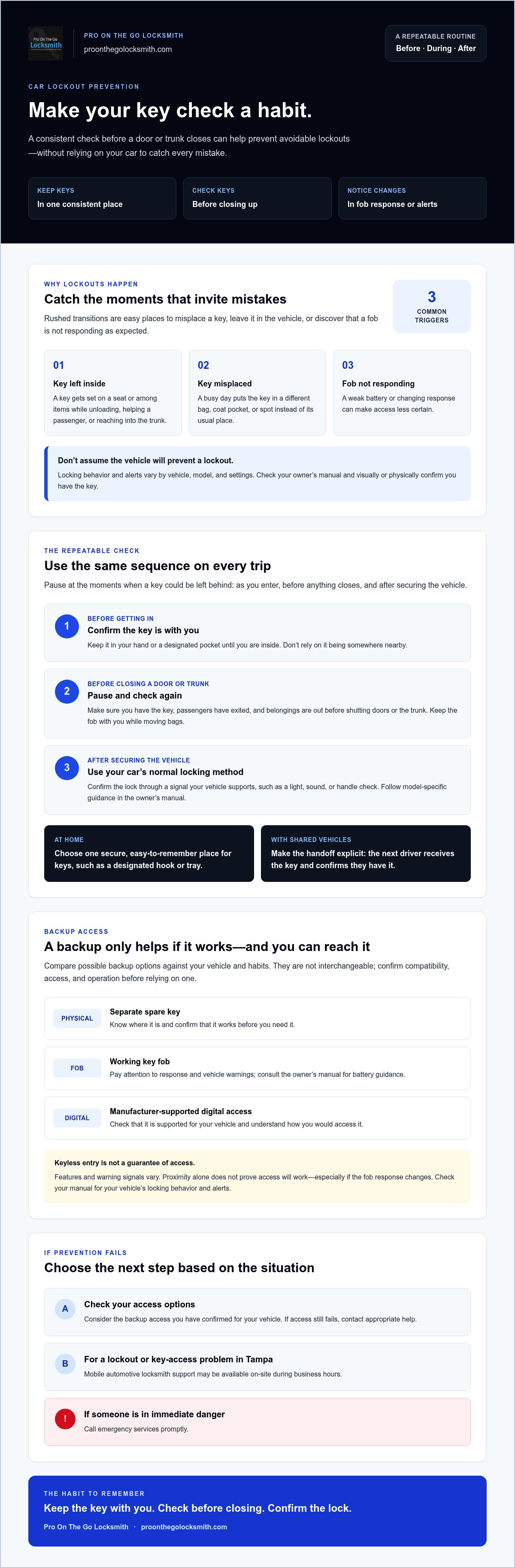
A few repeatable habits can reduce avoidable car lockouts. Common causes include keys left inside, keys misplaced during a busy day, and a key fob that stops responding as expected. Notice which situations are most likely to catch you off guard, then build a routine around them.
A preventive car-key routine is a consistent check of your keys and vehicle access before, during, and after every trip. It doesn’t need to be complicated. The goal is to check for your keys before a door closes, rather than realizing they’re missing afterward.
Which everyday situations lead to car lockouts?
Rushed exits make it easy to set keys on a seat while unloading groceries, helping a passenger, or reaching for something in the trunk. You may then close a door or trunk without realizing the key is still inside. Keys can also go missing when you put them on a counter, in a different bag, or in a coat pocket instead of their usual place.
Locking behavior varies by vehicle and may depend on the model, settings, or how a door is closed. Don’t assume your car will always detect a key inside or prevent a lockout. Before closing up, make a quick visual or touch check for the key.
How can keyless entry change your routine?
Smart-key systems can allow a vehicle to detect a fob nearby, but features and warning signals vary. A chime or dashboard message may alert you to a key-related issue, but not every vehicle provides the same warning. Check your owner’s manual for your model’s locking behavior and alerts. A smart key system uses electronic communication between the vehicle and key, so proximity alone doesn’t prove that access will work.
Before relying on keyless entry, confirm how your vehicle responds when the fob is inside, outside, or has a weak battery. Make checking for the key part of your exit routine, even if the doors usually unlock when you approach. A consistent check is more dependable than assuming the vehicle will catch every mistake.
Build a Daily Car-Key Routine That Helps Prevent Lockouts
A consistent sequence can make checking for your keys an automatic part of every trip. If you’re figuring out how to prevent getting locked out of your car, use the same steps when you arrive home, unload at a store, or hand the vehicle to another driver. Follow your owner’s manual if it describes a model-specific procedure.
What should drivers check before closing the car?
Use this short sequence when you approach and leave the vehicle:
Before getting in: Confirm your key or fob is with you, not just somewhere nearby. Keep it in your hand or a designated pocket until you’re inside.
Before closing a door or trunk: Pause and check that you have the key. Make sure passengers have exited and belongings are out before shutting doors or the trunk.
After securing the vehicle: Use the locking method specified for your car, then confirm the lock through its normal signal, such as a light, sound, or handle check if your vehicle supports it.
That brief pause matters most during transitions. If you’re moving bags from the cabin to the trunk, keep the fob with you rather than placing it on a seat or among the items you’re unloading. Don’t assume the car will warn you or prevent locking if the key is inside. Behavior varies by vehicle and settings.
How can a household make the routine consistent?
Choose one secure, easy-to-remember place for keys when they’re not in use, such as a designated hook or tray away from the door. Avoid putting them down wherever you happen to be, where they may be mistaken for a spare or gathered with items leaving the house.
For shared vehicles, agree who carries the key before anyone gets in or out. Make the handoff explicit: one person gives the key to the next driver, who confirms they have it. Avoid leaving the key in a bag that regularly moves between vehicles. The bag may come along while the key you need stays behind.
Keep the routine practical. If your manual describes a specific locking confirmation or a feature that changes the steps, follow that guidance. If you’re having an ongoing key-access problem, Tampa drivers can learn more about mobile automotive locksmith services.
Compare Spare Keys, Key Fobs, and Digital Access as Backup Plans
A backup is useful only if it works with your vehicle and you can reach it when needed. A separate physical key, a fob with a working battery, or manufacturer-supported digital access may each help, but they aren’t interchangeable. Consider how you’ll access each option and test it before relying on it.
Is a spare car key worth keeping?
A separate, tested spare gives you another option if your primary key is misplaced or stops working. Store it with a trusted person or in a secure, controlled location you can reach. Don’t conceal a key on or immediately around the vehicle. Check that the spare works with your car, and review spare car key options if you’re considering one.
Can a phone or backup fob replace a physical spare?
Not necessarily. Digital-key features depend on your vehicle’s make, model, and setup, so check the manufacturer’s instructions and test access before treating a phone as your only backup. A phone adds another dependency: you need the device and any required access method to be available. A backup fob can help, but its battery may fail. Consult your owner’s manual for the correct way to access the vehicle if the fob battery is depleted.
To decide how to prevent getting locked out of your car, choose a backup you can access reliably, then verify it works as intended. A tested spare stored securely, alongside a maintained primary fob, may provide more options than relying on a phone alone.
Check Your Key Fob and Backup Access Before a Problem
A fob that works today can become unreliable without much warning. Make periodic checks part of your routine: notice whether the vehicle responds consistently, watch for dashboard messages, and confirm that your backup key or access method is available. This helps you catch uncertainty before you depend on the fob during a busy trip.
There’s no universal battery replacement schedule. Follow your owner’s manual for the recommended battery type, replacement procedure, and backup instructions. Chip-based keys can also work differently from a basic remote. This automotive locksmith guide can help explain key and programming support if you need it.
What are signs that a key-fob battery may need attention?
A fob that works only at a shorter distance than usual or responds inconsistently may need attention, but those symptoms don’t prove the battery is the cause. A worn button or an issue with the vehicle’s key-recognition system may also affect response. Check your dashboard for a key warning and consult the manual for guidance specific to your model.
If the manual recommends battery replacement, use the specified battery type and follow the manufacturer’s steps. Avoid guessing based on appearance alone. If the fob still behaves unpredictably afterward, it may need further assessment rather than repeated battery changes.
How can you test your backup access safely?
Check a spare key or fob before you travel, while your primary key is available and you can follow the vehicle’s instructions. Confirm that the backup performs the functions you expect. A key that looks intact may still need programming or may not support every feature. Some fobs also contain a hidden mechanical key. Review the manual to learn whether yours has one and how to use it.
Key programming and replacement requirements can depend on the vehicle, key type, and existing setup. Don’t wait until the primary key is lost to find out whether a spare works. If you’re unsure about a smart key or need help with key access in Tampa, explore smart key replacement support and confirm which options suit your vehicle.
Knowing how to prevent getting locked out of your car includes checking that your backup plan works, not simply assuming it does. Keep model-specific instructions somewhere accessible, and revisit them if your key or vehicle changes.
If Prevention Fails, Take Safe Next Steps for a Car Lockout
A lockout can be stressful, but a clear sequence helps you make the next decision safely. First, move away from traffic or another immediate hazard and confirm which doors are locked. Then check only access methods authorized for your vehicle. If no safe option is available, contact appropriate professional help rather than trying to force entry.
If a child, vulnerable person, or animal is inside the vehicle and faces immediate danger, contact emergency services promptly. Don’t delay to work through other access options first.
What should you do first when locked out?
Pause and assess the situation before acting. Make sure you’re in a safe place, then verify that the vehicle is secure and that the key isn’t accessible through an authorized method. Depending on your vehicle, that could mean contacting someone who has a tested spare or using a manufacturer-supported access method you’ve already set up.
Check your surroundings: Move to a safer location if you’re close to traffic or in an isolated area.
Confirm your options: Check for an available spare or a vehicle-approved digital access method. Follow the owner’s manual and manufacturer instructions.
Avoid risky attempts: Don’t pry a door, force a lock, or use improvised tools. These attempts can cause injury or damage the vehicle.
For more detail about what professional assistance may involve, see this professional car lockout service guide.
When should you contact a mobile automotive locksmith?
If there’s no safe, authorized way to regain access, a mobile automotive locksmith may be an appropriate next step. Share the vehicle’s make, model, and year, whether you have a key or fob, and what happened. Those details can help a technician assess the vehicle’s access and key requirements. Don’t assume every vehicle uses the same entry or key system.
Pro On The Go Locksmith provides mobile automotive locksmith help in Tampa during business hours, including car lockout service. If you’re in the area and need professional assistance, explore mobile automotive locksmith services.
Prevention can lower the chance of a lockout, but a prepared response matters too. Knowing how to prevent getting locked out of your car is useful. Knowing when to stop troubleshooting and ask for appropriate help is part of the plan.
Make Your Key Routine Part of Every Drive
A consistent key check, a secure place for your keys, and a tested backup can help reduce everyday lockout risks. Check your fob and vehicle-specific instructions before a problem arises. If access fails, choose a safe, authorized next step instead of forcing a door or lock.
Building a routine is a practical way to learn how to prevent getting locked out of your car. Still, no plan can prevent every key or vehicle issue. Tampa drivers who need help can contact Pro On The Go Locksmith, which provides mobile automotive locksmith services on-site during business hours. The company’s Florida license number is HCLOC23013.
If you need professional support with a car lockout or key-access concern in Tampa, contact Pro On The Go Locksmith about mobile automotive locksmith services.
Frequently Asked Questions
What is the best way to prevent getting locked out of your car?
The best approach is a consistent key-check routine paired with a backup you’ve tested. Keep your key in one designated place, confirm it’s with you before closing a door or trunk, and verify the vehicle is secured using its normal method. Check your fob and backup access periodically, following the owner’s manual. These steps make how to prevent getting locked out of your car part of your everyday driving habits.
Can a car lock itself with the keys inside?
Yes, some vehicles may lock with a key inside, depending on the model, settings, and circumstances. Other vehicles may provide a warning or prevent certain locking actions, but don’t assume yours will. Review your owner’s manual for the vehicle’s locking behavior and alerts. Before closing a door or trunk, confirm that the key or fob is physically with you, even if your car usually detects it nearby.
How often should I replace my car key-fob battery?
There isn’t one replacement interval that applies to every vehicle and fob. Check your owner’s manual for the recommended battery type, replacement procedure, and any model-specific guidance. Reduced operating range or inconsistent response may signal that the fob needs attention, but those symptoms don’t confirm the battery is the cause. If the fob continues to behave unpredictably after following the manual, have the issue assessed rather than relying on guesswork.
Is it a good idea to hide a spare key on my car?
No. Hiding a spare on or immediately around your vehicle can make it easier for someone else to find, and it may also be inaccessible when you need it. Instead, keep a tested spare with a trusted person or in a secure, controlled place you can reach. Confirm that it works with your vehicle before relying on it, and avoid leaving it somewhere that moves between bags, cars, or daily errands.
Can I use my phone to unlock my car if I lose the key?
Possibly, if your vehicle supports manufacturer-approved digital access and you’ve set it up in advance. Compatibility and setup vary by vehicle, and access may depend on having your phone available and usable. Check the manufacturer’s instructions and test the feature before treating it as your only backup. If your vehicle doesn’t support digital access, or you haven’t activated it, you may need an authorized spare key or professional assistance.
What should I do if I am locked out of my car in Tampa?
Move to a safe location, confirm the vehicle is secure, and check for an authorized spare or manufacturer-supported access option. Don’t force the door or try improvised entry methods. If a person or animal faces immediate danger, contact emergency services promptly. If you have no safe way to regain access, Pro On The Go Locksmith provides mobile car lockout service in Tampa during business hours. Confirm current business hours before seeking service.
Can a locksmith make a spare key before I lose my only key?
Yes, a locksmith may be able to make a spare before your only key is lost, though the available options depend on your vehicle and key type. Some keys use a transponder chip or electronic fob that requires programming, not just a cut key blade. Pro On The Go Locksmith provides car key replacement, key fob programming, and transponder key programming in Tampa. Share your vehicle details to help determine what may be needed.


