
House Lock Rekey: The Professional Guide to Home Security Restoration

Updated: Sep 24
What if the most effective way to secure your home didn't require buying a single piece of new hardware? If you've recently moved or misplaced a set of keys, you might be searching for a house lock rekey to avoid the high cost of total replacement. It's natural to feel anxious about who might still hold a copy of your front door key. You want your family to be safe, but you shouldn't have to overpay for hardware that isn't actually broken.
This professional service offers a precise, diagnostic solution that restores your security without the waste of a full replacement. By adjusting the internal pins of your existing cylinders, a technician ensures that old keys become useless while your high-quality hardware remains in place. This guide explains how rekeying works, why it's the smarter financial choice for your property, and how you can finally consolidate your entire home to a single master key. We'll break down the technical process and help you decide when to keep your locks and when it's time for a modern upgrade.
Table of Contents
What is a House Lock Rekey and How Does It Work?
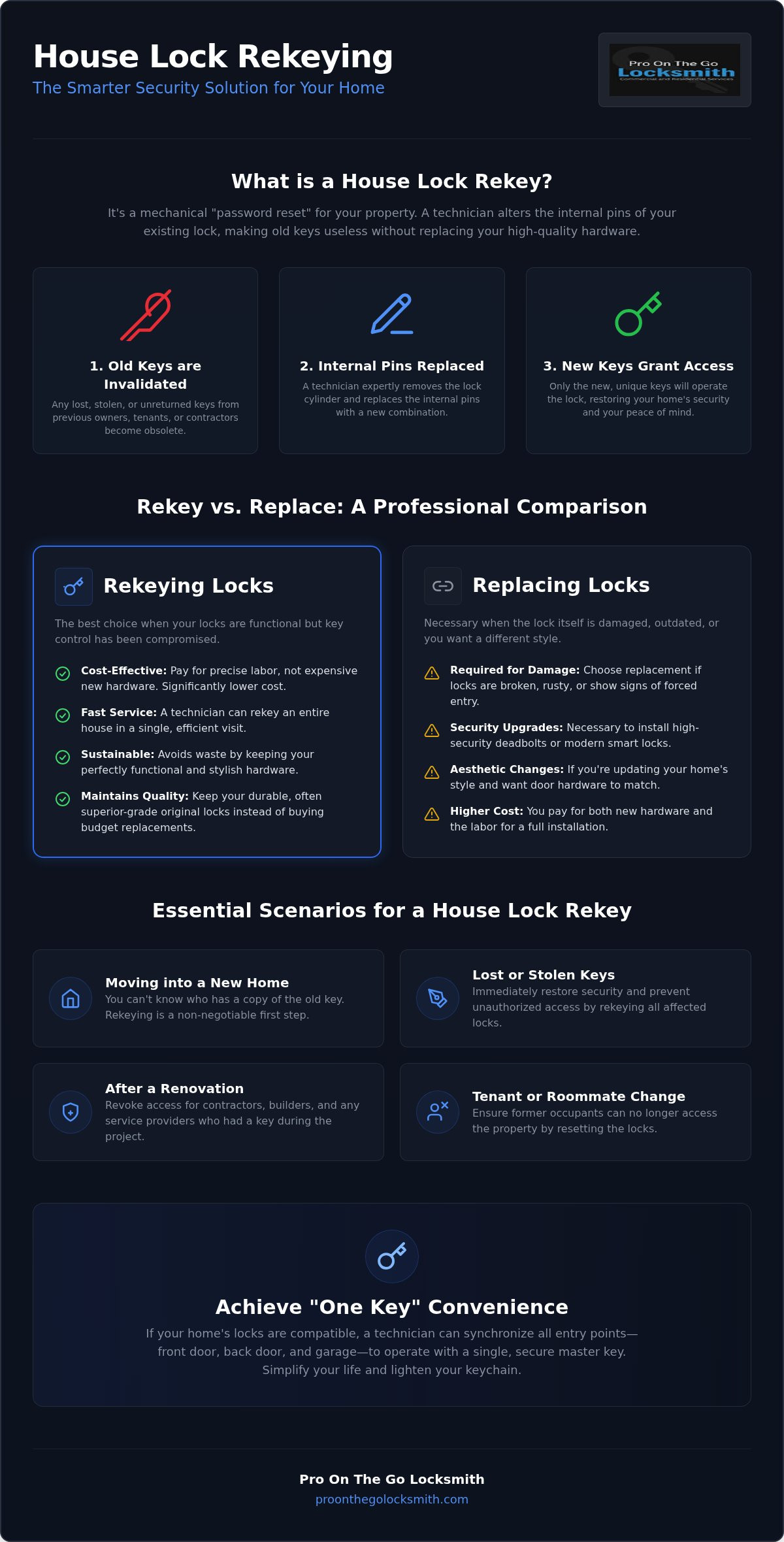
A house lock rekey is essentially a mechanical "password reset" for your property. Instead of removing the entire lock assembly from your door, a technician alters the internal pin configuration of the existing cylinder. This process ensures that any old keys previously in circulation will no longer function, effectively restoring your security without the need for expensive new hardware. It's a calculated, surgical approach to home protection that focuses on the internal mechanism rather than the external trim.
To understand How Lock Rekeying Works, you have to look at the shear line. This is the precise point where the internal plug can rotate within the lock housing. When a professional performs a house lock rekey, they replace the small brass pins inside the cylinder with new ones of varying heights. These new pins must align perfectly with the "cuts" or depths of your new key to bridge the shear line. If the pins are even a fraction of an inch off, the lock remains immobilized. This procedure requires either the current working key or the technical skill of a master technician to pick the lock open, as the cylinder must be in the "unlocked" position to be removed and serviced.
The Anatomy of a Rekeyable Lock
Inside a standard pin-tumbler lock, a series of spring-loaded stacks keep the door secure. These stacks consist of driver pins and key pins. When you insert a key, the key pins are pushed to a specific height. If that height matches the lock's "code," the driver pins clear the shear line and the plug turns. Most high-quality residential hardware is fully rekeyable. A technician will perform a quick diagnostic check to ensure the cylinder is healthy and the "play" in the plug is within professional tolerances before beginning the reset.
Why Rekeying is the Preferred Security Reset
Choosing to rekey rather than replace is a pragmatic decision for several reasons:
Cost-efficiency: You're paying for specialized labor and precision pins rather than the high cost of decorative brass and heavy steel.
Speed of service: A mobile technician can reset every entry point in a standard home during a single visit, often in less time than it takes to install one new deadbolt.
Sustainability: If your current hardware is structurally sound and fits your home's aesthetic, there's no reason to send functional metal to a landfill.
This method allows you to maintain the integrity of your existing high-quality hardware while gaining the peace of mind that comes with total key control.
Rekey vs. Change Locks: A Professional Comparison
Homeowners often assume that a security breach requires a trip to the hardware store for entirely new deadbolts. This is a common misconception that leads to unnecessary spending on inferior hardware. A professional house lock rekey focuses on the internal security "code" while keeping your existing, often higher-quality, brass and steel components on the door. It's a choice between paying for a technician's precision labor or paying for both labor and expensive new retail packaging.
One of the most significant advantages of rekeying is the ability to achieve "One Key" convenience. Most competitors overlook the technical possibility of master keying within a residence. If your front, back, and garage doors use compatible keyways, a specialist can synchronize every cylinder to operate with a single key. This eliminates the frustration of a heavy keychain and simplifies your daily routine. If you're unsure if your current hardware supports this synchronization, you can contact us for a professional diagnostic evaluation of your home's entry points.
When Rekeying is the Correct Choice
Rekeying is the superior option when your existing hardware is structurally sound but your "key control" has been compromised. If you've just moved into a new home, you have no way of knowing how many copies of the old keys are held by previous owners, neighbors, or contractors. This is also the ideal solution for terminating access for a former tenant or service provider. In these cases, the lock isn't broken; it simply needs a new identity. Most older homes feature Grade 2 commercial-grade locks that are actually more durable than the Grade 3 "builder-grade" locks found in many big-box stores today.
When You Should Opt for Full Lock Replacement
There are specific scenarios where a house lock rekey isn't enough. If the internal mechanism feels "gritty," the key sticks frequently, or the cylinder has visible signs of forced entry, the hardware's structural integrity is gone. Full replacement is also necessary when you want to upgrade your security level, such as moving from a standard deadbolt to a modern smart lock or a high-security restricted keyway system. Finally, if you're renovating and want to change your door's aesthetic from polished brass to matte black, a full hardware swap is the only way to achieve that visual update.
The cost analysis is straightforward. Rekeying involves a service call and a small fee per cylinder. Replacing involves that same service call, installation labor for every door, and the retail cost of the new locks. For a typical three-door home, rekeying is almost always the more pragmatic and cost-effective path to total security restoration.
The Professional Rekeying Process: A Diagnostic Approach
A professional house lock rekey is more than a simple pin swap; it's a comprehensive security restoration. Before any mechanical changes begin, a technician performs a rigorous security audit of your hardware. This involves checking for "play" in the cylinder and assessing the overall health of the plug. If the internal components show signs of metal fatigue or excessive wear, rekeying may be a temporary fix for a deeper problem. A master technician identifies these issues early, ensuring your time and money are invested in hardware that remains reliable.
The actual reset requires microscopic precision. Professional locksmiths use pinning kits with 0.003-inch tolerances to ensure the new key interacts perfectly with the shear line. Even a tiny misalignment can cause the lock to "catch" or fail prematurely. After the pins are set, the technician cleans and lubricates the cylinder with specialized non-greasy agents. This step removes years of grit and restores that smooth "factory feel" you haven't experienced since the lock was new. Final testing involves verifying operation from both the interior and exterior to guarantee flawless performance.
Why Professional Precision Beats DIY Kits
While online forums often suggest retail rekeying kits, these consumer-grade products lack the diagnostic depth of a professional service. DIYers frequently face the "spring trap" where a misaligned plug follower causes internal springs and pins to explode out of the cylinder. This mistake often results in a permanent lockout and a ruined lock. Professionals use specialized tools like plug followers, surgical tweezers, and depth gauges to maintain the integrity of the mechanism. We see the underlying mechanical issues that a standard DIY kit simply cannot address.
Master Keying Systems for the Modern Home
A sophisticated house lock rekey can also involve creating multiple access levels for your property. This is known as master keying. You can have a "Master Key" that opens every door while providing a "Guest Key" or "Maid Key" that only operates the front door and kitchen entry. This level of control is perfect for managing service providers without compromising your private spaces like a home office or master suite. To find the right setup for your property, you can Learn more about different types of locks and how they integrate into a master system.
When to Rekey Your House Locks: Essential Security Scenarios
Security is as much about psychological peace of mind as it is about mechanical strength. The "New Home" rule is the most common reason for a house lock rekey. When you close on a property, you inherit every copy of a key ever made by the previous owners, their neighbors, or their real estate agents. Verified data shows that 34% of burglars enter through the front door. If an unauthorized person has a working key, your deadbolt becomes a simple door handle. Resetting the pins immediately establishes a "Day One" baseline for your family's safety.
Post-construction security is another critical window. During a renovation, keys are often passed between general contractors and various subcontractors. Even if you trust your primary builder, you can't account for every individual who had access to your keyway. Similarly, relationship changes like a divorce or a roommate moving out require a pragmatic reset of your boundaries. It's not about drama; it's about maintaining sole control over who can cross your threshold. If you've lost a set of keys, the protocol is simple: treat your security as compromised until the cylinders are reset.
Securing Your New Tampa Property
Key control is an important part of residential security. When property occupancy changes, checking for old or hidden spare keys can be a useful first step. A professional technician can help assess key-control concerns while performing the rekey. For a deeper dive into the technical differences between these services, see our Rekey vs Change Locks: A Professional Guide.
Annual Security Maintenance Checklists
A routine house lock rekey often doubles as a comprehensive safety inspection. During the process, we test the deadbolt throw to ensure it fully engages the strike plate. If your house has settled, the alignment might be off, preventing the lock from reaching its full strength. We also look for signs of "lock bumping" or attempted forced entry that you might have missed. This diagnostic approach identifies mechanical wear before it turns into a lockout. If you need to secure your home quickly and professionally, you can schedule your residential rekeying service today.
Choosing a Mobile Locksmith for House Lock Rekeying in Tampa
Selecting the right professional for a house lock rekey involves more than finding the lowest price. Residential security work requires careful identification of the existing hardware, keying needs, and door condition. When evaluating a provider, look for consistent business information, clear communication, recent customer feedback, and a written explanation of the work to be performed.
When our mobile lab arrives at your door, you aren't just getting a technician with a toolbox. You're getting a fully equipped security restoration facility. We carry the precision pins, depth gauges, and specialized lubricants necessary to restore your hardware to its peak mechanical state. Our approach is methodical: identify the cylinder type, assess the wear, and execute a surgical reset. This technical transparency ensures you know exactly why each step is taken to protect your home and family.
The Benefits of On-Site Mobile Service
The primary advantage of our mobile-only model is convenience combined with verification. You don't need to struggle with removing your deadbolts and transporting them to a hardware store. We perform the entire house lock rekey right at your threshold. This allows for immediate testing of every new key on every door while the technician is still present. If a cylinder needs a minor adjustment to account for door alignment or weather-stripping resistance, we fix it on the spot. To schedule your on-site security restoration, you can Contact Pro On The Go Locksmith during our standard business hours.
Preparing for Your Rekeying Appointment
A successful service call starts with a small amount of preparation. To keep the process efficient, please ensure you have the current working keys available for the technician. As we established earlier, the cylinder must be in the unlocked position to be serviced without destructive entry. Clear any obstructions from your entry doors and interior locks, such as mudroom clutter or heavy furniture. Finally, think about your master keying preferences. If you want specific doors to operate on a different access level for guests or service providers, let us know before the pin-loading begins. This proactive communication ensures your final result matches your exact security plan.
Secure Your Home with Precision Restoration
Restoring your property's security doesn't have to mean a complete hardware overhaul. A professional house lock rekey offers a pragmatic, cost-effective solution that prioritizes mechanical integrity over expensive replacements. You now understand how diagnostic pin-loading and "One Key" synchronization can simplify your life while effectively locking out previous key holders. By choosing a specialized technician, you ensure that your existing hardware receives the precision maintenance it needs to function flawlessly for years.
Pro On The Go Locksmith brings a high-tech mobile lab directly to your Tampa doorstep. Operating under Mobile Residential Locksmith Service, we provide a transparent and methodical approach to modern security restoration. Don't leave your family's safety to chance or outdated DIY kits. Secure your Tampa home today with professional rekeying services from Pro On The Go Locksmith. We're ready to help you reclaim total control over your home's entry points with the confidence of a master technician.
Frequently Asked Questions
Is it cheaper to rekey or replace locks?
Rekeying is significantly more cost-effective than a total replacement. You pay for the technician's specialized labor and small internal pins rather than the full retail price of decorative brass and heavy steel hardware. For most Tampa homes with functional locks, a house lock rekey provides the same security level as a new lock at a fraction of the cost because you're maintaining the high-quality hardware you already own.
Can I rekey my house locks myself?
While retail kits exist, DIY rekeying carries significant risks for the average homeowner. Without professional tools like plug followers and tweezers, you can easily cause the internal springs and pins to "explode" out of the cylinder, resulting in a permanent lockout. A professional house lock rekey includes a diagnostic health check and precision pin-loading that consumer-grade kits cannot match, ensuring your door remains functional and secure.
How long does it take a locksmith to rekey a house?
A professional can typically rekey a single lock cylinder in 15 to 20 minutes. For a standard Tampa home with three entry doors, the entire process usually takes about an hour. This includes the initial security audit, removing the cylinders, resetting the pins, and testing the new keys. Our mobile lab is designed for this efficiency, allowing us to complete the house lock rekey in a single visit during standard business hours.
Do I need the original key to rekey a lock?
You don't necessarily need the original key, but having it makes the process faster and less labor-intensive. If you've lost all your keys, a skilled technician can use professional picking or decoding tools to turn the cylinder and access the internal plug. Once the lock is in the "open" position, the rekeying process proceeds as normal. This is a common part of our property security restoration services for new homeowners in Tampa.
Can all locks be rekeyed to use the same key?
Most residential locks can be synchronized to a single key if they share the same brand or "keyway." For example, most Schlage locks can work together, but you cannot typically rekey a Kwikset lock to use a Schlage key. During our on-site visit, we perform a compatibility check across all your entry points. If the hardware matches, we can consolidate your heavy keychain into a single, convenient master key system.
Does rekeying a lock make it more secure?
Rekeying restores security by ensuring only you have the current "code" to your home. It doesn't change the physical grade of the lock, but it eliminates the threat of old, unaccounted-for keys held by previous owners or contractors. Additionally, a professional rekeying service includes cleaning and lubrication. This restores the mechanical integrity of the cylinder and identifies any underlying wear that could lead to a future failure or lockout.
What should I do if I lost the only key to my house lock?
If all keys are lost, you should contact a mobile locksmith to perform an "all keys lost" restoration. We can gain entry to the property without damaging your door and then rekey the existing cylinders to a new key. This process effectively resets your security and provides you with a fresh start. We handle these scenarios regularly for Tampa residents, focusing on a clean, professional resolution that preserves your existing high-quality hardware.
Is a license required for locksmiths in Tampa, Florida?
Transparent business information still matters when choosing a locksmith. When hiring a technician in Tampa, verify the business identity and current registration information that applies, and ask for proof of insurance if that is important to your project. Clear documentation and authorization help keep residential security work accountable.


