
Ford Transponder Key Programming: The Professional 2026 Guide
- Pro On The Go Locksmith
- 1 day ago
- 11 min read

That $20 "self-programming" shortcut you found online is often the fastest way to trigger a permanent security lockout on your Ford dashboard. While the idea of a quick DIY fix is tempting, modern vehicle security is a precision game where a single error can leave you stranded. Mastering Ford transponder key programming requires more than just a blank key and a YouTube video; it demands an understanding of how your car’s brain communicates with its ignition.
It's frustrating to face dealership programming fees that feel like a ransom for your own vehicle. You're likely tired of the confusion surrounding different PATS versions and the constant worry that a lost key might mean an expensive tow. We understand that stress. This professional 2026 guide will show you how to navigate these digital hurdles reliably. We'll cover the essential "two-key" requirement, explain the evolution of Ford security hardware, and provide a clear path to starting your engine. As a licensed specialist, we're here to help you move from frustration to a fully functional ignition.
Table of Contents
Understanding Ford’s PATS and Transponder Technology
Ford's Passive Anti-Theft System, commonly known as PATS, represents a significant shift from simple mechanical locks to integrated digital security. Since 1996, Ford has utilized RFID technology to ensure that only a verified key can initiate the ignition sequence. This system effectively eliminated traditional hot-wiring by requiring a digital "handshake" before the engine control module (ECM) allows the fuel system to engage. Without this verification, your vehicle remains immobilized, regardless of how well the physical key turns in the cylinder.
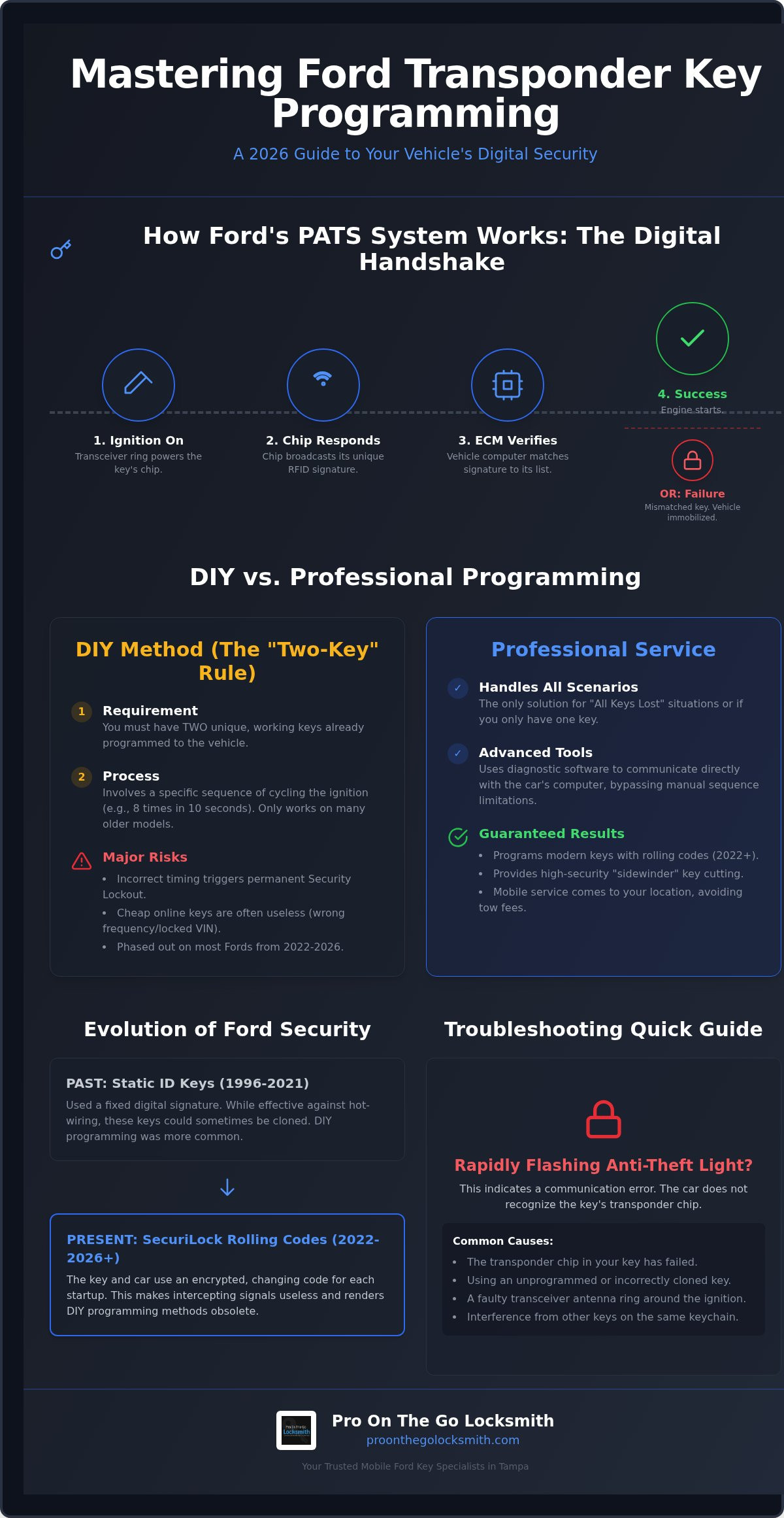
The process is a precise diagnostic loop. When you turn the key, the transceiver, which is an antenna ring around the ignition cylinder, sends a radio frequency pulse. The chip inside your key absorbs this energy and broadcasts a unique digital signature back to the car. The transceiver captures this signal and relays it to the vehicle's computer. If the signature matches the authorized list, the engine starts. If there's a mismatch, the vehicle enters a lockout state. This complexity is why Ford transponder key programming is a task for specialists rather than general hobbyists.
The Role of the Transponder Chip
The chip itself is the heart of your vehicle's security. It doesn't require a battery to function; instead, it draws power from the transceiver's magnetic field. This digital signature is what separates a genuine key from a simple mechanical copy. It's also where many owners get confused between cloning and programming. Cloning simply copies an existing key's ID onto a new chip, while professional Ford transponder key programming introduces an entirely new, unique ID to the car's memory. If the chip fails or the signal is weak, you'll see the immobilizer light on the dashboard flash rapidly, indicating a communication breakdown.
SecuriLock: Modern Ford Anti-Theft Systems
As we move into 2026, Ford has advanced its SecuriLock technology to handle increasingly sophisticated theft methods. Modern 2026 models utilize encrypted rolling codes. Unlike older systems that used a static ID, rolling codes change the required response every time you start the car. This prevents hackers from intercepting and replaying your key's signal. These systems are now deeply integrated into smart keys and proximity fobs, making the "key" a complex computer peripheral. Understanding what is a transponder key is vital for today's owners. It helps you realize that a physical "sidewinder" cut is only half the battle. The real security lies in the digital handshake that happens in milliseconds.
Can You Program a Ford Key Yourself? DIY vs. Professional Methods
The desire to avoid dealership fees often leads owners to attempt DIY Ford transponder key programming. For many older models, Ford included a "Two-Key" rule that allowed owners to add a third key without specialized equipment. This process requires two unique, previously programmed keys. If you only have one original key, the vehicle’s security protocol assumes an unauthorized attempt is being made and will block the addition of any new chips. This is a common point of failure for those buying "unlocked" keys from unverified online marketplaces. These cheap alternatives often contain the wrong transponder frequency or are permanently locked to another vehicle's VIN, rendering them useless for your Ford.
Attempting the sequence too many times without success can trigger "Security Lockout Mode." You'll recognize this by a rapidly flashing anti-theft light or a vehicle that refuses to respond even to the original key for a specific period. If you find yourself stuck in a lockout, it's often safer to consult a professional locksmith before the module requires a hard reset.
The On-Board Programming Sequence
In legacy Ford models, the manual sequence typically involves cycling the ignition from OFF to RUN eight times within ten seconds, ending in the RUN position. The door locks will usually cycle to confirm the car has entered programming mode. Timing is the most critical factor here. A delay of even one second between turns can break the loop. However, owners of 2022 through 2026 Ford models should note that this manual sequence has been largely phased out. To combat relay attacks and sophisticated theft, modern Ford modules now require a secure handshake through the diagnostic port that manual ignition cycles cannot replicate.
When Professional Tools are Mandatory
In "All Keys Lost" scenarios, DIY methods are non-existent. There is no manual sequence to bypass a completely empty key memory. This situation requires a technician to connect directly to the OBD-II port using licensed software such as Ford IDS (Integrated Diagnostic System) or FJDS. These tools allow us to clear the old key data and perform a fresh parameter reset. While DIY attempts might seem cheaper, the cost of a failed attempt often includes a tow to the dealership and a potential module replacement. Opting for a professional mobile car key replacement service ensures the job is done on-site with the correct encryption, saving you both time and the risk of a permanent security lockout.
The Professional Process: How Ford Keys Are Programmed Without an Original
When all keys are lost, the restoration process shifts from simple duplication to a comprehensive system reset. This scenario is where professional expertise becomes essential. Our first step is always a thorough verification of vehicle ownership. We use the vehicle identification number (VIN) to retrieve the specific manufacturer key codes. This data allows us to cut a high-security "sidewinder" or laser-cut blade with factory precision. This isn't just about making a key that turns in the lock; it's about restoring the mechanical integrity of your ignition and door cylinders to their original specifications.
Once the physical key is ready, we move to the digital phase of Ford transponder key programming. We connect high-level diagnostic equipment directly to the vehicle's OBD-II port. This allows us to access the security module and perform a parameter reset. If your previous keys were stolen or lost in a public place, we perform a full data wipe. This action clears all old key signatures from the car’s memory, ensuring that only the new keys in our possession can start the engine. Finally, we conduct a full system sweep to verify that every remote function and security sensor works exactly as intended.
OBD-II Programming and Data Syncing
Professional tools allow us to bypass the standard 10-minute security wait time that Ford builds into its modules. This efficiency is critical for mobile service. We "marry" the new transponder ID to the engine control module, creating a permanent digital bond. This deep-level syncing is the only reliable way to ensure the car key not detected error is permanently resolved. We aren't just tricking the system; we're re-establishing a trusted communication channel between the key and the car's brain.
Handling Smart Keys and Intelligent Access Fobs
Modern 2026 Ford models with push-to-start require an even higher level of precision. We program the proximity sensors to ensure the car recognizes your presence before you even touch the door handle. During this sync, we're careful to avoid accidentally enabling "MyKey" restrictions, which can limit vehicle speed or audio volume. We also perform a voltage check on the vehicle's battery. A weak battery during the sync process can lead to corrupted data and a failed handshake, so we ensure the electrical system is stable before we begin the final write.
Troubleshooting Common Ford Key Programming and Immobilizer Issues
Troubleshooting Ford transponder key programming issues often begins with the dashboard security light. If this light flashes rapidly when you attempt to start the engine, the vehicle has failed to recognize the key’s digital signature. This is a clear indicator that the PATS handshake has been interrupted. Sometimes, the fix is as simple as removing other RFID cards or heavy metal keychains from your ring. These objects can create electromagnetic interference, effectively drowning out the key chip's signal before the transceiver can read it. It's a localized signal battle that the key needs to win to start your car.
If the system enters a lockout, you may encounter the "10-Minute Rule." This is a built-in security delay designed to discourage car thieves from brute-forcing the ignition. During this time, the car won't allow any programming attempts, even with the correct tools. Patience is required here; cycling the ignition prematurely only resets the timer. We often see owners get stuck in a loop of frustration because they don't wait for this security window to close before trying again.
Decoding the Immobilizer Light
A steady light usually means the system is armed, but a fast-pulsing sequence is a diagnostic code. If the light flashes for 60 seconds and then begins a specific pattern, it's telling you exactly what failed. For example, certain patterns indicate the transceiver ring, which is the antenna around your ignition, has failed. You can attempt a basic system reset by disconnecting the car battery for 15 minutes to clear the module's temporary memory. However, if the blink code persists after the reset, the hardware likely needs professional replacement or a software override.
Physical vs. Electronic Failures
Not every failure is digital. A worn-out ignition cylinder might prevent the key from reaching the precise position needed for the transceiver to "hear" the chip. We also frequently encounter key broken in car door lock scenarios where the physical damage to the key blade impacts the transponder's internal alignment. However, the most frequent culprit for failed programming is a low car battery. If the vehicle's voltage drops below a specific threshold, the security module won't have enough power to complete the digital write, leading to a corrupted sync. If your Ford won't recognize your key despite multiple attempts, contact our team for a professional diagnostic session to identify the root cause before you're left stranded.
Mobile Ford Key Programming Services in Tampa: Speed and Security
Finding yourself with a non-starting vehicle in a Tampa parking lot is a high-stress scenario. Traditional solutions involve a costly tow to a dealership and a multi-day wait for a service appointment. Choosing a mobile specialist for your Ford transponder key programming eliminates these logistical hurdles entirely. We bring the diagnostic lab to your location, whether you're at home, your office, or stranded roadside. Most programming tasks are completed in under 30 minutes, restoring your mobility without the "dealership premium" or the need for a tow truck.
Beyond speed, we prioritize your vehicle's long-term security. If your keys were lost or stolen, we don't just add a new one; we perform a deep system wipe. This process removes the old digital signatures from your Ford's memory, ensuring that no one can use a found key to access or start your car. Our expertise spans the entire Ford lineup, from the rugged, classic F-150 to the advanced digital architecture of the electric Mustang Mach-E. We treat every vehicle with the precision required for modern digital security.
Why Tampa Drivers Trust Pro On The Go
Tampa's unique environment, characterized by high humidity and salt air, can take a toll on sensitive electronic key components over time. We understand these local factors and use high-grade chips designed to withstand the Florida climate. As a licensed Florida locksmith (#HCLOC23013), we provide a level of accountability that uncertified contractors can't match. We maintain a strictly professional boundary while offering the neighborly service you expect from a local specialist. Our pricing is transparent and provided upfront, ensuring there are no surprises once the engine starts.
Booking Your Ford Key Service
To ensure a swift resolution, have your vehicle information ready when you call. We require the year, model, and the 17-digit VIN located on your dashboard or driver's side door jamb. This data allows us to arrive with the correct transponder blanks and software patches pre-loaded for your specific module. We value your time and safety, providing a sophisticated alternative to less-specialized competitors. Contact Pro On The Go Locksmith for Ford programming today!
Secure Your Vehicle with Professional Precision
Mastering the digital handshake of your vehicle is the only way to ensure long-term reliability. You now understand that while the "Two-Key" rule offers a DIY path for some; modern 2026 security hardware requires specialized diagnostic syncing. Attempting shortcuts often leads to frustrating lockouts. Professional intervention provides a clear resolution without the dealership premium. By choosing a licensed specialist; you ensure that your vehicle's engine control module and transponder are perfectly synchronized.
Pro On The Go Locksmith brings expert Ford PATS diagnostics directly to your driveway or office. As a Licensed Florida Locksmith #HCLOC23013; we prioritize precision and transparency. We eliminate the need for an expensive tow and provide a sophisticated; mobile-ready solution for your Ford transponder key programming needs. Don't let a security error keep you off the road. Get Your Ford Key Programmed On-Site in Tampa and regain your peace of mind today. Your vehicle's sophisticated security system is in capable hands.
Frequently Asked Questions
Can I program a Ford transponder key with only one working key?
You typically cannot perform DIY programming with only one working key. Ford's security protocol requires two unique, previously programmed keys to enter the manual on-board sequence. If you've lost one of your originals, you'll need a technician to connect to the OBD-II port. This professional intervention bypasses the manual requirement and allows the module to accept new digital signatures without needing the second physical key present.
How much does a locksmith charge to program a Ford key in Tampa?
Professional fees in Tampa depend on your vehicle's specific security generation and the type of hardware required. A high-security "sidewinder" key for a 2026 model involves different software than a standard transponder for a 2010 F-150. While costs vary, mobile services provide significant value by eliminating dealership towing fees and providing on-site resolution. We recommend having your VIN ready for an accurate service estimate based on your vehicle's exact encryption level.
What is a PATS key and does my Ford have one?
PATS stands for Passive Anti-Theft System, which is Ford's proprietary RFID technology. If your Ford was manufactured after 1996, it almost certainly utilizes this system. You can identify a PATS key by the thick plastic head which houses the transponder chip. This chip must complete a digital handshake with the car's computer before the fuel system engages. It's a standard security feature across nearly the entire Ford vehicle lineup today.
How do I know if my Ford key needs to be programmed?
Your key requires programming if the engine won't start despite the battery being fully charged. The most obvious sign is the anti-theft indicator on your dashboard. If this light stays solid or flashes rapidly when you turn the ignition, the car's brain hasn't verified the key's ID. In these cases, Ford transponder key programming is necessary to re-establish the trusted connection between your physical key and the vehicle's engine control module.
Can a locksmith program a Ford key without the original?
Yes, a specialized locksmith can program a new key even if you've lost all originals. We utilize "All Keys Lost" solutions that involve accessing the vehicle's security module through the diagnostic port. This process allows us to reset the immobilizer and sync entirely new chips to the car's memory. We also cut the physical blade using factory codes derived from your VIN, ensuring the new key functions perfectly in your existing locks.
What should I do if my Ford anti-theft light is flashing rapidly?
A rapidly flashing light indicates that the system has detected a security fault or an unauthorized key. You should stop attempting to start the vehicle immediately to avoid a permanent software lockout. Turn the ignition off and wait at least 15 minutes for the security timer to reset. If the light continues to flash after this period, it typically signals a hardware failure in the transceiver ring or a corrupted transponder chip.
Does programming a new key erase my old Ford keys?
Standard "add-a-key" procedures do not erase your existing keys. However, if you've lost your keys or suspect they were stolen, we can perform a "parameter reset" that wipes all previous signatures. This is a critical security step that ensures only the keys currently in your possession can start the engine. During Ford transponder key programming, we can choose to either append the new key or perform a full memory clear for your protection.
How long does it take for a mobile locksmith to program a Ford key?
Most professional mobile locksmiths can complete the entire process in under 30 minutes once they arrive at your location. This timeframe includes the precision cutting of the high-security blade and the digital syncing of the transponder chip to your vehicle's computer. Mobile service is designed for efficiency, allowing you to bypass the long wait times and logistical headaches associated with dealership service departments while receiving the same high-level technical results.


