
Car Key Snapped in Ignition: Professional Solutions and Extraction Guide 2026

Updated: Sep 14
When a car key breaks in the ignition, the remaining fragment can prevent the key from turning or being removed. Avoid pushing tools into the keyway or forcing the broken piece. A mobile automotive locksmith can assess whether the fragment can be extracted and whether the ignition cylinder or replacement key also needs attention. The right approach depends on the vehicle and the condition of the lock.
This guide explains the precautions to take when a key breaks in an ignition, why extraction methods differ by vehicle, and what a technician may check afterward. In some cases the original ignition can be retained; in others, wear or damage requires additional repair. A replacement key may also need cutting or electronic pairing, depending on the model.
Key Takeaways
If the engine is running or the vehicle is not safely secured, follow the vehicle manufacturer's safety guidance and seek roadside assistance; do not force the broken key or ignition switch.
Have the damaged key and ignition assessed; the break alone does not establish the cause or the repair needed.
Avoid improvised extraction attempts and ask a technician to assess the fragment, cylinder condition, and available options.
Follow the vehicle manufacturer's guidance for the ignition; lubrication and extraction methods should be chosen for the specific vehicle and condition.
Avoid forcing a stiff or damaged key and request an assessment if it binds or shows visible damage.
Table of Contents
Don’t Panic: Immediate Steps When Your Car Key Snaps in the Ignition
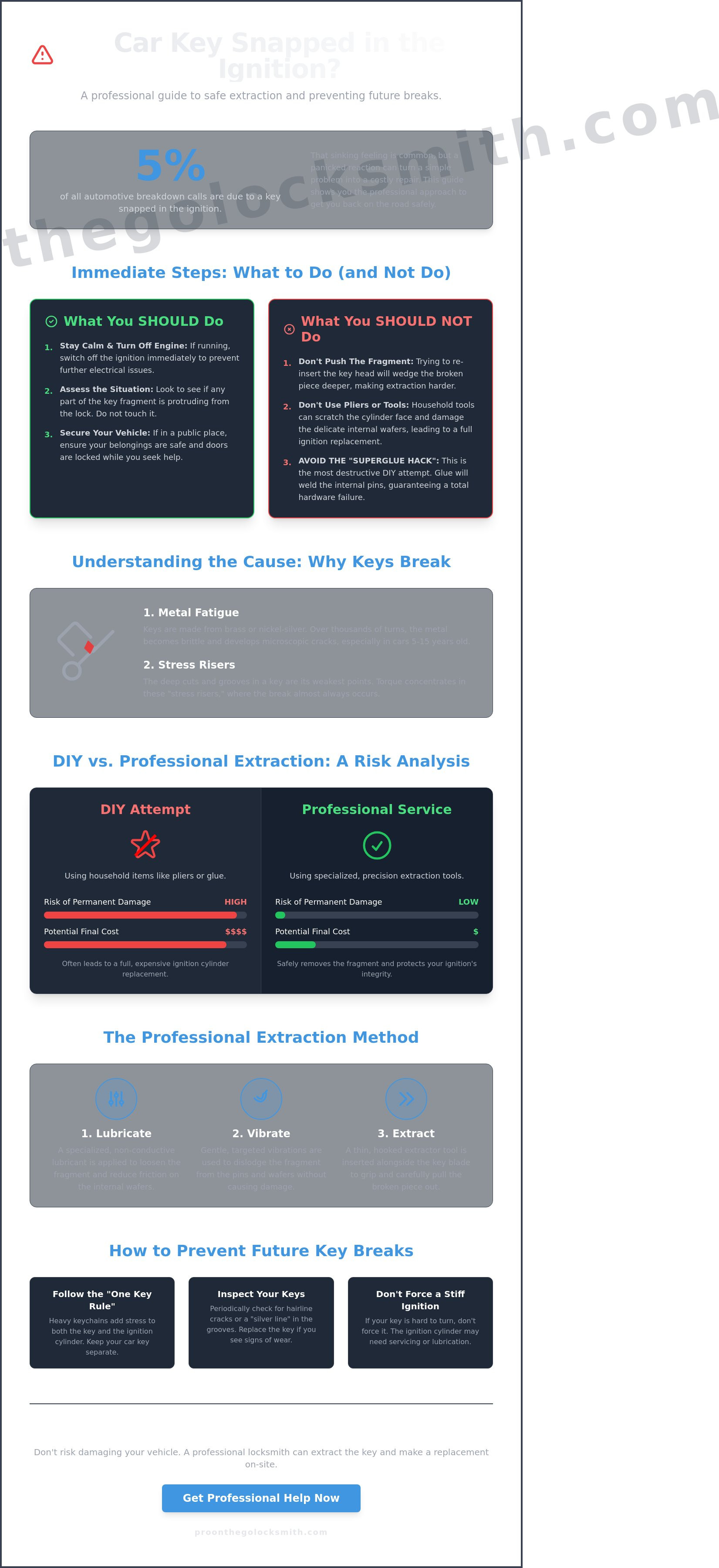
If a key breaks while the vehicle is stationary, avoid turning or pushing the remaining fragment. If the engine is running or the vehicle is not safely secured, follow the vehicle manufacturer's safety instructions and seek roadside assistance as needed; do not force an ignition switch. Once the vehicle is safely parked, tell the technician where the key broke and whether part of the blade is still visible.
Follow these immediate steps to stabilize the situation:
Stop all attempts to re-insert the broken head of the key. Trying to "reconnect" the pieces will only push the trapped fragment deeper.
Put down the pliers and screwdrivers. Metal tools can scratch the face of the cylinder or deform the keyway, making professional removal much harder.
Assess the visible blade. Look closely at the ignition switch to see if any part of the broken blade protrudes from the face of the cylinder.
Secure your belongings. If you're in a public place, ensure your vehicle is locked while you seek assistance.
Why You Should Stop Fiddling with the Ignition Switch
Pushing against a broken fragment is a common mistake that forces the metal deeper into the lock's core. Modern ignitions rely on a series of delicate internal wafers that must align perfectly for the cylinder to turn. When you use makeshift tools to "fish" for the key, you risk bending these wafers or scratching the internal housing. This mechanical trauma often escalates a simple extraction into a complex ignition repair requirement. Attempting removal without the right tools can damage the cylinder, but drilling or replacement is not an inevitable outcome. A technician should assess the fragment and lock condition before recommending repair.
The Danger of the "Superglue Hack"
Online videos sometimes suggest gluing the broken halves together. Avoid putting adhesive into an ignition cylinder: it can bond to the key fragment or internal components and make removal more difficult. The extent of any damage varies, so do not assume the entire ignition must be replaced. Leave the fragment in place and request a professional assessment.
Understanding the Mechanics: Why Car Keys Break Inside Ignitions
A key can fracture because it is bent or worn, because the ignition cylinder resists turning, or because the blade was subjected to excess force. The cause cannot be determined from the break alone. If a key has become difficult to turn or shows visible damage, stop forcing it and arrange an inspection before it breaks.
A worn key or ignition cylinder may create resistance, but breakage can occur in vehicles of different model years. Whether a replacement needs transponder programming depends on the vehicle and type of key. If you're dealing with a fragment in the lock, professional broken key extraction may be an option. A technician should explain the risks and whether other work is necessary.
Metal Fatigue and Key Wear Patterns
Brass and nickel-silver keys become increasingly brittle over years of service. You can often predict a failure by looking for a "silver line" or a faint hairline crack running through one of the deeper grooves. Even in 2026, many drivers still rely on physical keys for entry or ignition overrides. These mechanical components bear the brunt of daily wear. If you notice your key feels "spongy" or has a visible bend, it's nearing the end of its structural integrity. Proactively scheduling a Car Key Replacement can prevent the stress of a mid-journey snap.
Local Factors: How Tampa’s Climate Affects Your Ignition
Tampa's heat and humidity are practical considerations for vehicle care, but a stiff ignition does not by itself prove corrosion or lubricant failure. Wear, debris, a damaged key, a steering-lock issue, or a cylinder problem may all contribute. If turning the key requires extra force, describe the symptoms and vehicle model to a qualified technician rather than applying more pressure.
DIY Extraction vs. Professional Locksmith Services: Weighing the Risks
Tweezers, paper clips, and other improvised tools may push a broken blade farther into the ignition or scratch the keyway. The safest next step depends on how much of the fragment is visible and whether the cylinder has already been damaged. Avoid forcing it; a technician can inspect the lock and explain whether extraction, ignition repair, or another service is appropriate.
Removing the fragment is only part of the assessment. The technician may also inspect the remaining key, check for binding or visible cylinder damage, and test operation where the vehicle permits. Successful extraction does not by itself rule out underlying wear or guarantee that the ignition will remain trouble-free.
The Hidden Dangers of Amateur Key Removal
Trying to grab a short fragment with improvised tools can scratch the keyway or push the metal deeper into the cylinder. Aggressive movement of the ignition or steering wheel may create additional complications. Stop if anything binds, and describe the current ignition position when you request service.
When to Call a Mobile Locksmith in Tampa
Mobile locksmith service can be convenient because assessment may be possible at the vehicle's location. However, not every car or ignition problem can be resolved on-site, and a dealer or repair facility may be appropriate for some models. After a fragment is removed, the vehicle may also need mobile car key replacement if a new key is required and supported for that vehicle. Ask about availability, programming needs, total cost, and whether towing could still be necessary.
The Professional Extraction Process and Ignition Restoration
A technician first evaluates the position of the broken blade and the condition of the ignition cylinder. Depending on access and the vehicle, specialized extraction tools may help remove the fragment. The procedure should be chosen to minimize additional damage; some cases require further diagnosis or repair after the fragment is removed.
There is no single extraction technique that is appropriate for every ignition. Tool selection depends on fragment position, cylinder design, and any existing damage. Avoid adding lubricant, adhesive, or other substances without model-specific guidance. After removal, the technician can assess whether the cylinder turns normally or needs further attention.
Specialized Tools for Non-Destructive Entry
Professional extraction kits may include fine hooks or other tools suited to the shape and depth of the fragment. A technician chooses the method according to the lock design and condition. Some keys can be removed without disassembly, while other situations may require access to or repair of additional components.
Beyond Extraction: Cutting and Programming a New Key
After extraction, a technician can assess whether the pieces or available vehicle information can help make a replacement. A properly cut blade may be sufficient for older mechanical-key systems, while other vehicles also need electronic recognition. Programming the transponder chip may be needed for vehicles equipped with an immobilizer; that is not universal for every metal key. Any work on the ignition cylinder, including lubrication, should follow the appropriate vehicle-specific procedure. For help with a trapped key fragment, ask about Broken Car Key Extraction services directly at your location.
Preventing Future Key Breaks: A Guide to Ignition Longevity
Not every broken key indicates permanent ignition damage, and not every fragment can be removed without additional work. Avoid forcing a stiff key and arrange an inspection if the blade is bent, cracked, or difficult to turn. Early attention may reduce the chance of a more complicated problem.
A bulky keyring can place extra weight on a traditional ignition key while driving. If your vehicle uses an inserted metal key, consider keeping that key separate from heavy accessories and avoid twisting it against resistance. This is a practical precaution, not a guarantee against wear or breakage.
Do not apply lubricant to an ignition cylinder on a fixed schedule without checking the vehicle manufacturer's guidance. Lock and ignition designs differ, and the wrong product can create problems. If a key sticks, binds, or requires extra force, have the key and ignition assessed rather than adding sprays or powder as a first response.
Signs Your Key or Ignition is Nearing Failure
Difficulty inserting, removing, or turning a metal ignition key deserves attention. A worn blade, steering-lock pressure, or an issue inside the cylinder are possible explanations. Inspect the key for bends or cracks, avoid applying extra force, and have a professional evaluate persistent symptoms. A replacement key or ignition service may be recommended after inspection.
Why Pro On The Go Locksmith is Tampa’s Choice for Ignition Crisis
Pro On The Go Locksmith provides mobile automotive key and ignition-related services in Tampa. When you contact us, share the vehicle year, make, model, location, and whether any working key remains. We can confirm whether the requested assessment or service is available for that vehicle during business hours. Price, parts, and whether towing is needed should be confirmed for the specific case.
Restore Your Vehicle's Security and Mobility
A broken ignition key can sometimes be removed without replacing the cylinder, but the outcome depends on the fragment and any pre-existing damage. Avoid forcing the key or inserting household tools. A technician can inspect the condition, describe the options, and explain when additional ignition work or a different service provider may be needed.
Pro On The Go Locksmith offers mobile automotive locksmith services in Tampa and surrounding service areas. We can review the reported problem, confirm the vehicle and requested service, and discuss options during our posted Monday–Saturday, 5 AM–8 PM hours. Ask About Broken Key Extraction in Tampa. The next step depends on the condition of the fragment, cylinder, and key system. We can explain whether extraction, a replacement key, or further ignition work is appropriate for your vehicle.
Frequently Asked Questions
Can a locksmith get a broken key out of an ignition?
An automotive locksmith may be able to remove a broken ignition key with specialized extraction tools. Whether the original cylinder can be preserved depends on the vehicle, fragment location, and condition of the lock. Inspection comes before any promise about the final repair.
How much does it cost to extract a broken car key?
The cost of broken-key removal depends on vehicle design, where the fragment sits, access conditions, and whether the ignition or key needs additional work. When requesting service, ask what is included in the quoted price and whether additional parts, programming, or towing may be necessary.
Will I need a new ignition if my key snaps inside?
Not every broken key requires a new ignition. After the fragment is removed, the cylinder can be checked for wear or damage. Some vehicles only need extraction and a replacement key; others may need ignition repair or replacement, depending on the findings.
Can I still start my car if the key is broken in the ignition?
Do not try to start the vehicle by reinserting a broken blade or using a screwdriver in the ignition. Those actions may move the fragment or damage the cylinder. If the vehicle cannot be secured or the ignition is stuck in an active position, request appropriate roadside assistance and describe the situation before a technician begins work.
How long does professional broken key extraction take?
Extraction time varies with the ignition design, the location of the broken fragment, and whether prior removal attempts caused damage. Cutting or programming a replacement key, when needed and available, adds work. Ask the provider for an estimate based on the vehicle and condition; no single time range applies to every case.
Why did my car key snap off in the first place?
If a car key snaps in the ignition, the break alone does not establish the cause. A technician can assess the key and ignition and explain whether wear, damage, or another problem needs attention. Check the vehicle manufacturer's guidance before using any lubricant or maintenance product.
Is it possible to use the broken piece of the key to make a new one?
In some cases, the remaining key pieces provide information useful for making a replacement. Other cases require a working spare, vehicle-specific key information, or additional decoding. The method and any required electronic programming depend on the vehicle; a replacement cannot be promised from the fragments alone.
What should I do if the key broke off in the door lock instead of the ignition?
The same non-destructive extraction rules apply to door locks to prevent damaging the external handle assembly. Avoid using wire or adhesives to fish the piece out, as these often jam the pins. A mobile technician can clear the door lock on-site and ensure that a car key snapped in ignition or door doesn't lead to a permanent loss of vehicle access.
Avoid further damage and request broken car key extraction in Tampa.


