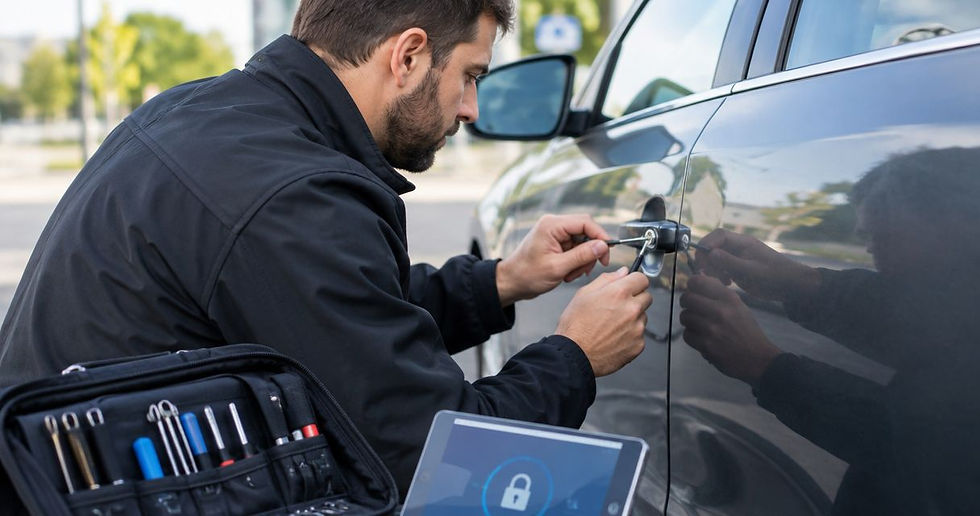
Automotive Keys and Remotes: How to Choose the Right Solution

A car key can look right and still leave you stranded. A mechanical key, transponder, remote, and smart key each work differently, so a replacement might unlock the door but fail to start the engine. If you’re dealing with automotive keys and remotes after a malfunction or loss, start by noting which functions still work. That’s especially useful if you’re down to your last working key.
The next step depends on the key technology and the symptom. A remote that won’t lock the doors points to a different problem than a key that turns but won’t start the car. This guide explains the main key types, what common symptoms can indicate, and how replacement and programming fit in. It also covers how Pro On The Go Locksmith’s mobile automotive service in Tampa can help with key replacement, programming, lockouts, and broken keys on-site when the vehicle can’t easily be taken elsewhere.
Table of Contents
Automotive Keys and Remotes: What Each Type Does
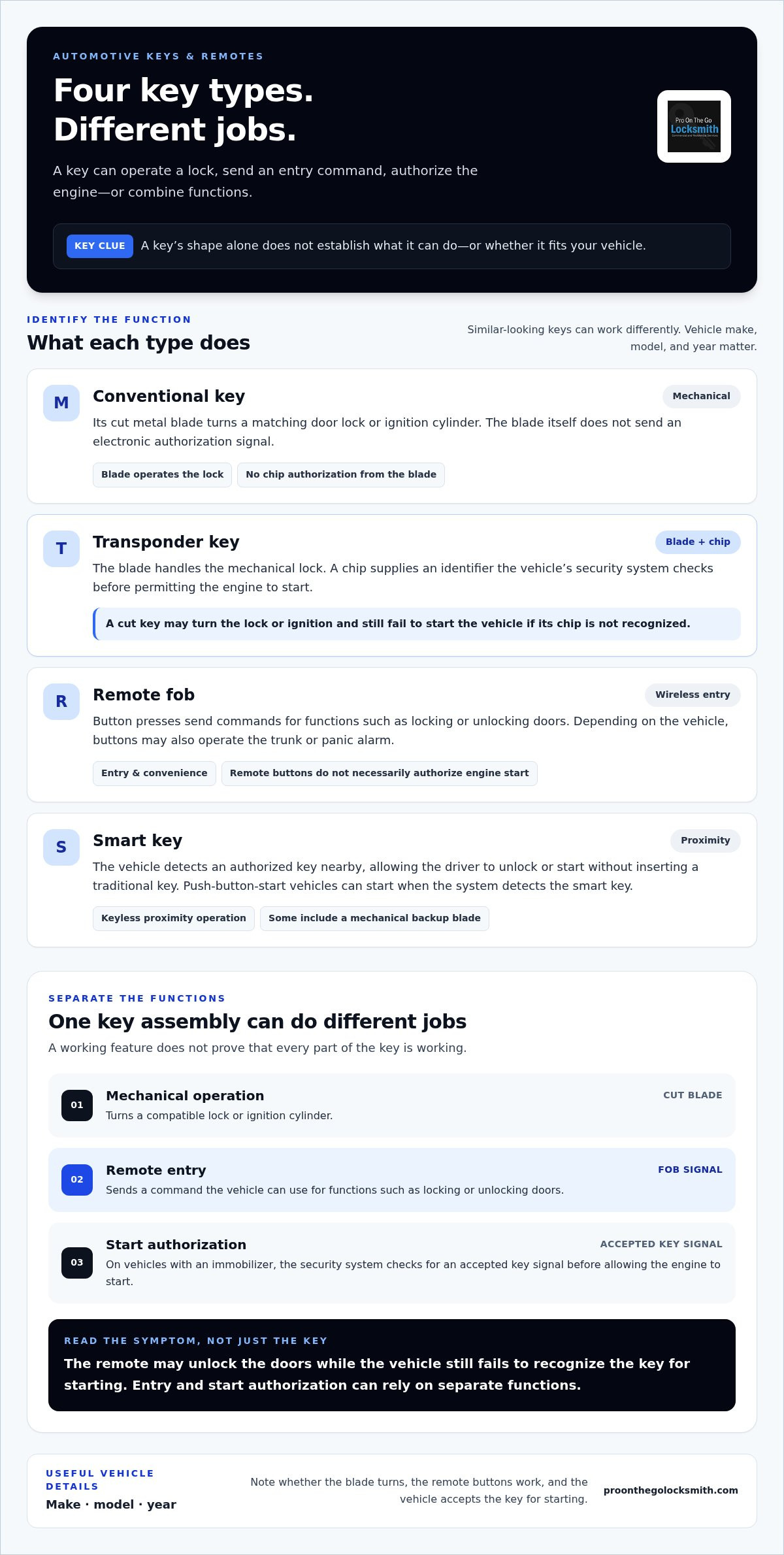
A car key may operate a lock, communicate with the vehicle, or do both. A metal blade can turn a door lock, while an electronic component may also need to be recognized before the engine will start. For Tampa drivers, the key’s shape is only a clue. Technology varies by vehicle make, model, and year, so similar-looking keys may perform different jobs.
In simple terms, a remote sends commands for entry, while a transponder supplies an electronic identifier that the vehicle checks before allowing the engine to start. Some key assemblies combine both functions, but appearance alone doesn’t establish compatibility.
How a conventional key differs from a transponder key
A conventional key uses its cut metal blade to operate a matching door lock or ignition cylinder. When the cuts align with the lock, the key can turn it. This is a mechanical action. The blade itself doesn’t send an electronic authorization signal.
A transponder key also has a blade, but it contains a chip that communicates an identifier to the vehicle’s security system. If the system recognizes the chip, it permits the engine to start. The chip’s electronic role is separate from the blade’s mechanical role. A cut key might turn a lock or ignition but still fail to start the vehicle if its chip isn’t recognized. For a deeper explanation of chip-based recognition, see this transponder key guide.
What remote fobs and smart keys control
A remote fob typically sends a wireless command for functions such as locking or unlocking doors. Depending on the vehicle, its buttons may also operate the trunk or trigger a panic alarm. These are entry and convenience functions. Pressing a remote button doesn’t necessarily authorize the engine to start. A fob may include a transponder, but the terms describe different functions.
A smart key generally works through proximity: the vehicle detects an authorized key nearby, allowing the driver to unlock or start it without inserting a traditional key. In a push-button-start vehicle, the driver can press the start button while the system detects the smart key. Some smart keys also contain a mechanical backup blade, though features vary. The Smart Key Technology overview describes how this keyless approach works and its security considerations.
When identifying your automotive keys and remotes, note what happens when you use each part. Does the blade turn a lock? Do the buttons control entry? Does the vehicle recognize the key for starting? These observations help distinguish a mechanical issue from a remote or authorization problem. For vehicle-specific identification, make, model, and year matter more than appearance alone.
How Automotive Keys and Remotes Communicate With Your Car
Starting a vehicle can involve more than turning a blade. In a key system with electronic security, the vehicle must recognize an accepted signal as well as respond to any mechanical action. The exact sequence varies by make, model, and year. Separating a key’s physical, entry, and start functions makes symptoms easier to describe.
Think of the process in three parts:
Mechanical operation: A cut blade turns a compatible lock or ignition cylinder. This is a physical interaction between the key and the lock.
Remote entry: Pressing a fob button sends a signal the vehicle can use for a function such as locking or unlocking the doors.
Start authorization: On vehicles with an immobilizer, the security system checks for an accepted key signal before allowing the engine to start.
These functions may sit in one key assembly, but they don’t necessarily rely on the same component. A vehicle can respond to a remote-entry command while still rejecting a key for starting.
The roles of the immobilizer and transponder chip
An immobilizer helps prevent the engine from starting unless the vehicle accepts an authorized key signal. A transponder chip can provide the electronic identifier used in that check. Put simply, the vehicle looks for an accepted credential, and the key supplies one. The details vary by vehicle, so this analogy describes the general purpose rather than a universal sequence.
A correctly cut key may turn the ignition but still need electronic programming before the vehicle recognizes it for starting. Cutting matches the blade to the lock. Programming establishes the electronic relationship required by the vehicle’s security system. For a deeper explanation, explore this automotive locksmith information.
Why remote entry and engine start can behave differently
Remote-entry buttons and engine authorization can involve separate functions, even when they’re built into the same fob. One working feature doesn’t prove that every part of the key is working. For example, a fob might unlock the doors while the vehicle fails to recognize the key when the driver tries to start it. The entry signal is getting a response, but the start-authorizing function may need attention. That symptom alone doesn’t confirm the cause.
Programming steps vary by vehicle. Don’t assume a procedure for one model will work on another, or that repeated button presses can pair every replacement key. Depending on the vehicle’s system, a replacement may need both a correctly matched physical blade and electronic programming. Note exactly what works: whether the blade turns, the remote buttons operate the locks, and the vehicle accepts the key for starting.
If the problem involves a replacement key or electronic recognition, mobile automotive locksmith service in Tampa can address physical key work and programming on-site during business hours.
Choose the Right Automotive Key or Remote Solution by Symptom
The most useful clue is what still works. A missing key, broken blade, unresponsive fob, and key the car won’t recognize can call for different work. Use this guide to describe the problem and identify a sensible next step. It isn’t a diagnosis: the same symptom can have more than one cause.
When a key is lost, damaged, or no longer recognized
A lost key is missing; a damaged key is physically compromised; an unrecognized key is present but isn’t accepted for starting. These distinctions help separate replacement or extraction from an electronic issue. A cut replacement may address a worn or broken blade, while a key with a chip may also need programming for the vehicle to recognize it.
Losing the only working key can involve a different process from making a copy when a working key is available. When describing the problem, say whether any keys remain and, if you know, whether yours is a smart key. This information helps guide replacement and programming for Tampa drivers.
When the remote stops working but the key still operates
Before arranging help, make a quick note of what works. Does the blade operate the door or ignition? Do any fob buttons respond? Does the vehicle start? These details help distinguish an entry-function problem from a start-recognition problem. A remote’s failure doesn’t automatically mean it needs programming. A battery, fob fault, programming issue, or vehicle system could be involved, and symptoms alone can’t establish which one.
For Tampa drivers, mobile automotive locksmith service can address key replacement and programming on-site, a practical option when the vehicle can’t easily be taken elsewhere. Clear symptom details help focus the next step for your automotive keys and remotes without guessing at the cause.
Prepare for Mobile Automotive Key Help in Tampa
A little information before an on-site visit helps focus the assessment. You don’t need to identify the exact electronic key type yourself. Start with what you know about the vehicle and describe what happens when you try to use the key or remote.
Identify the vehicle: Note its make, model, and year. These details help guide vehicle-specific key and remote work.
Describe the symptom: Explain whether the problem affects door entry, the ignition, push-button start, or more than one function. Mention what still works.
Gather available keys: Set aside any working or nonworking keys and remotes, if practical. Having them available can help the technician understand the issue.
Information that helps identify the correct key system
Make, model, and year provide a useful starting point because key systems differ between vehicles. Describe features you recognize, such as a metal blade, buttons, or push-button start, without guessing whether a key contains a transponder or uses proximity technology. If another key or remote works, have it nearby. These details can help distinguish a physical-key concern from an electronic one.
Before the visit, share the vehicle’s make, model, and year, what the key looks like, which functions fail, and which keys or remotes still work. That checklist gives a clearer picture than saying only that “the key isn’t working.” For example, explain whether the remote unlocks the doors but the vehicle won’t start, or whether neither entry nor starting works. Report what you observed rather than guessing at the cause.
What to expect from an on-site locksmith assessment
An on-site assessment can begin with a review of your symptoms and the information you’ve gathered. The technician may then examine the available key and vehicle to identify the relevant system and determine what work fits the problem. Depending on the findings, the need may involve physical replacement, key fob programming, transponder programming, or another automotive locksmith service.
This assessment matters because the same complaint can have different causes. A remote that fails to unlock the doors doesn’t establish whether the issue is in the fob or the vehicle. Likewise, a key that turns but won’t start the vehicle may need a different response than a broken blade. The technician can use the vehicle and key details to guide the next step rather than relying on appearance alone.
Pro On The Go Locksmith provides mobile automotive locksmith service in Tampa during business hours, a practical option when the vehicle can’t easily be taken elsewhere. Explore mobile automotive locksmith services to arrange help with your automotive keys and remotes.
How Pro On The Go Locksmith Helps With Automotive Keys and Remotes
Once you’ve identified what’s failing, match the need to the right kind of automotive locksmith work. A missing key, a fob that won’t communicate, and a vehicle with no working keys call for different approaches. Pro On The Go Locksmith provides mobile automotive service in Tampa during business hours, including physical key replacement and electronic programming. On-site help is especially practical when the vehicle can’t easily be taken elsewhere.
Matching the service to the key problem
Car key replacement can address a missing or unusable key. Depending on the vehicle’s system, the work may involve creating a physical key, electronic programming, or both. Key fob programming and transponder key programming support the electronic functions of relevant key systems. If every working key is lost, an all-keys-lost solution addresses that situation rather than treating it as a routine duplicate. Vehicle make, model, and year help guide the work because one process doesn’t fit every car.
Missing or unusable key: Car key replacement can restore access with a key suited to the vehicle’s system.
Fob or chip recognition issue: Key fob or transponder programming addresses the electronic side when relevant.
No working keys remain: All-keys-lost help is available for this distinct situation.
These needs can overlap. For example, a replacement for a vehicle with electronic key recognition may require both a physical key and programming. A remote-entry complaint may call for a different assessment than a key that turns but isn’t accepted for starting. Describe the exact symptoms to help distinguish those paths. You don’t need to identify the technical cause yourself.
Take the next step for key or remote help in Tampa
When arranging mobile service, share the vehicle’s make, model, and year, explain what happens when you use the key, and mention any working keys or remotes. Note whether the issue affects door entry, the ignition, push-button start, or more than one function. These details give the technician a useful starting point for assessing the vehicle and key.
If your need is a replacement, explore Tampa car key replacement. Pro On The Go Locksmith is licensed in Florida under license number HCLOC23013. Describe the vehicle and access problem to arrange mobile automotive locksmith help in Tampa during business hours.
Get automotive locksmith help for your keys or remote in Tampa.
Plan Ahead to Keep Your Next Drive Simple
The best time to think about a backup key is before your only working one disappears. If you still have a functioning key, consider whether keeping a spare would reduce stress if it’s lost or damaged later. A little preparation can make a future access problem easier to handle.
For help choosing the right solution for your automotive keys and remotes, share what you know about the vehicle and explain what you need the key to do. Pro On The Go Locksmith provides mobile automotive locksmith service in Tampa during business hours and holds Florida license number HCLOC23013.
Get automotive locksmith help and take the next step toward vehicle access. With the right information and a clear plan, you can move forward with confidence.
Frequently Asked Questions
Is a remote key fob the same as a transponder key?
No. A remote fob sends commands for functions such as locking or unlocking, while a transponder is involved in the vehicle’s authorization to start. One assembly may contain both, so the terms can describe different parts or functions of the same key. When describing a replacement need, explain what the key does rather than relying on its shape or label.
Can I program a replacement car remote myself?
Sometimes, but the procedure depends on the vehicle. Some owner manuals describe a pairing process, while other systems require specialized equipment or a technician. Don’t try instructions intended for another make or model. An unsuccessful sequence may waste time without resolving the issue. Check the instructions for your specific vehicle, and if the remote still won’t pair, key fob programming can help address the electronic setup.
Does a replacement remote need to match my car’s make, model, and year?
Yes. Compatibility should be based on the vehicle, not just a similar-looking shell or button layout. Remote systems and electronic requirements can differ across makes, models, and years, including within a manufacturer’s lineup. Before choosing a replacement, gather the vehicle identification details and compare them with the remote’s specifications. A visual match alone doesn’t establish that the remote will communicate correctly with your car.
Can one car key or remote work with more than one vehicle?
Usually, a key or remote is set up for a particular vehicle, so don’t assume a key that operates one car will work with another of the same brand. Some systems may support a compatible key being configured for more than one vehicle, but this depends on the specific system and setup. If you have several cars, keep their keys clearly identified to avoid mixing them up.
How can I tell whether a key fob battery or the vehicle battery is causing the problem?
Look at the pattern, but treat it as a clue rather than a diagnosis. If the car starts normally but the fob buttons respond inconsistently or only at close range, the fob may be involved. If the vehicle also has dim lights or struggles to start, its battery or another vehicle system may need attention. Try another working fob if available, and note which functions still operate.
What happens if my car remote works intermittently?
Intermittent operation can come from a weakening fob battery, worn buttons, an internal fob issue, programming, interference, or a vehicle-side problem. Notice whether the remote fails in one location, only with a particular button, or after the vehicle has been unused. That pattern helps narrow the assessment, but it can’t confirm the cause on its own. Avoid repeatedly pressing buttons instead of noting the failure pattern.
Can a locksmith make a replacement key without the original?
Yes, an automotive locksmith can help when all keys are lost, though the process depends on the vehicle’s key system. The technician may need to identify the vehicle and determine the appropriate replacement and programming steps without using an existing key as a reference. In Tampa, Pro On The Go Locksmith offers all-keys-lost solutions as part of its mobile automotive locksmith services during business hours.